Guide to Hobby Master Diecast Aircraft Models – Air Power Series

What Is Hobby Master?
Hobby Master is a diecast model manufacturer known for highly detailed military aircraft and armour models. Based in Asia and established in the early 2000s, the brand has built a strong following among collectors who like:
-
Modern fighter jets and attack aircraft.
-
Detailed weapon loads and underwing stores.
-
Realistic camouflage and panel line detail.
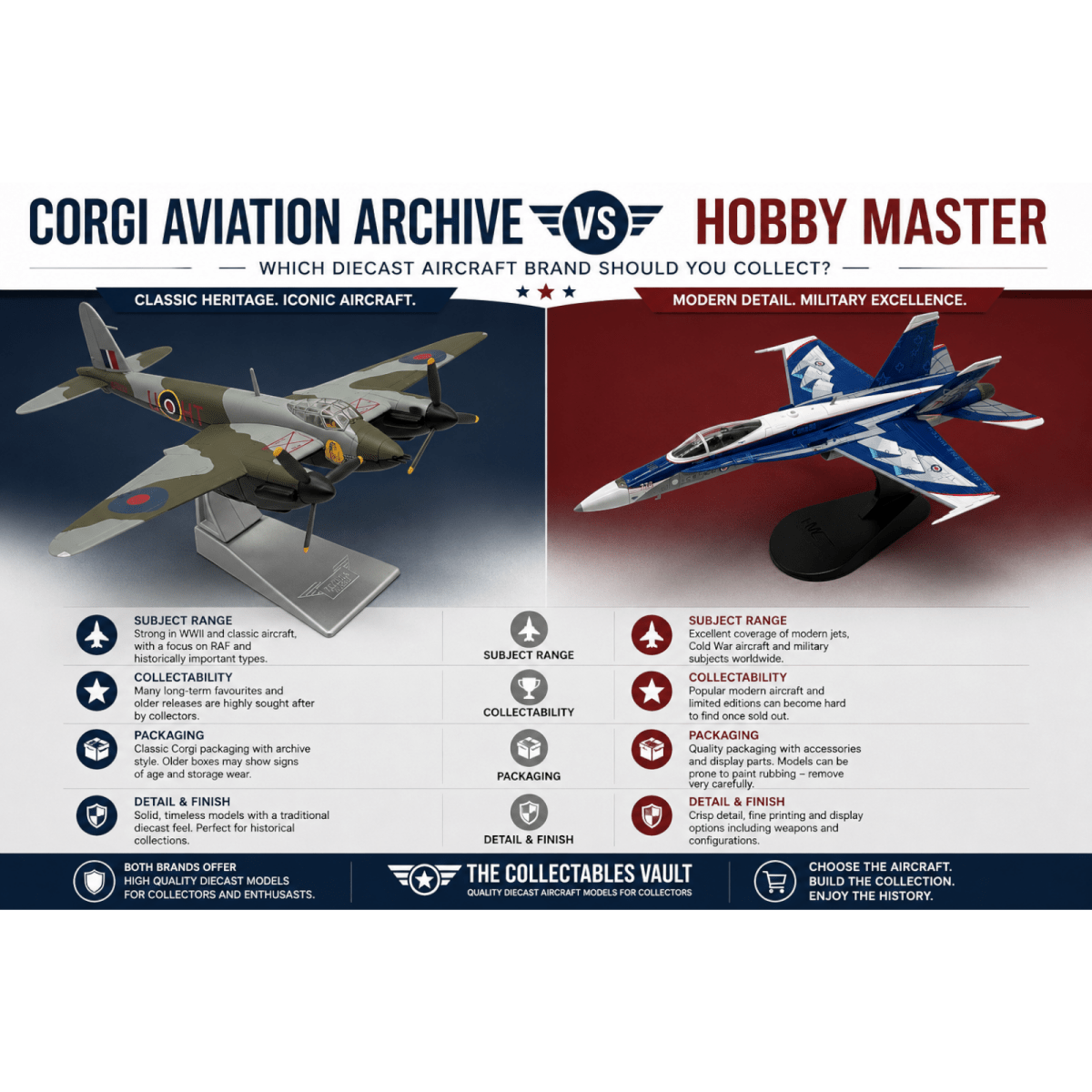
Where Corgi is often associated with classic British subjects and older tooling's, Hobby Master is usually viewed as a more “technical” brand, focusing on crisp moulding, sharp tampo printing and accurate schemes.
Hobby Master Series & Product Lines
Hobby Master divides its releases into several series. The ones most aircraft collectors focus on are:
Air Power Series
-
The main diecast aircraft line.
-
Primarily 1:72 scale, with some models in other scales.
-
Covers WW2 fighters, Cold War jets and a wide range of modern aircraft such as F-16s, F-15s, F-18s, Tornados, Mirages and more.
-
Often includes special schemes, anniversary markings and aggressor/adversary liveries.
Ground Power Series
-
Focuses on armoured vehicles and ground equipment, usually in smaller scales such as 1:72.
-
Provides good display companions for aircraft from the same era.
You’ll also occasionally see other sub-lines and special releases, but for most aviation collectors the Air Power Series is where the interest lies.
Scales Used by Hobby Master
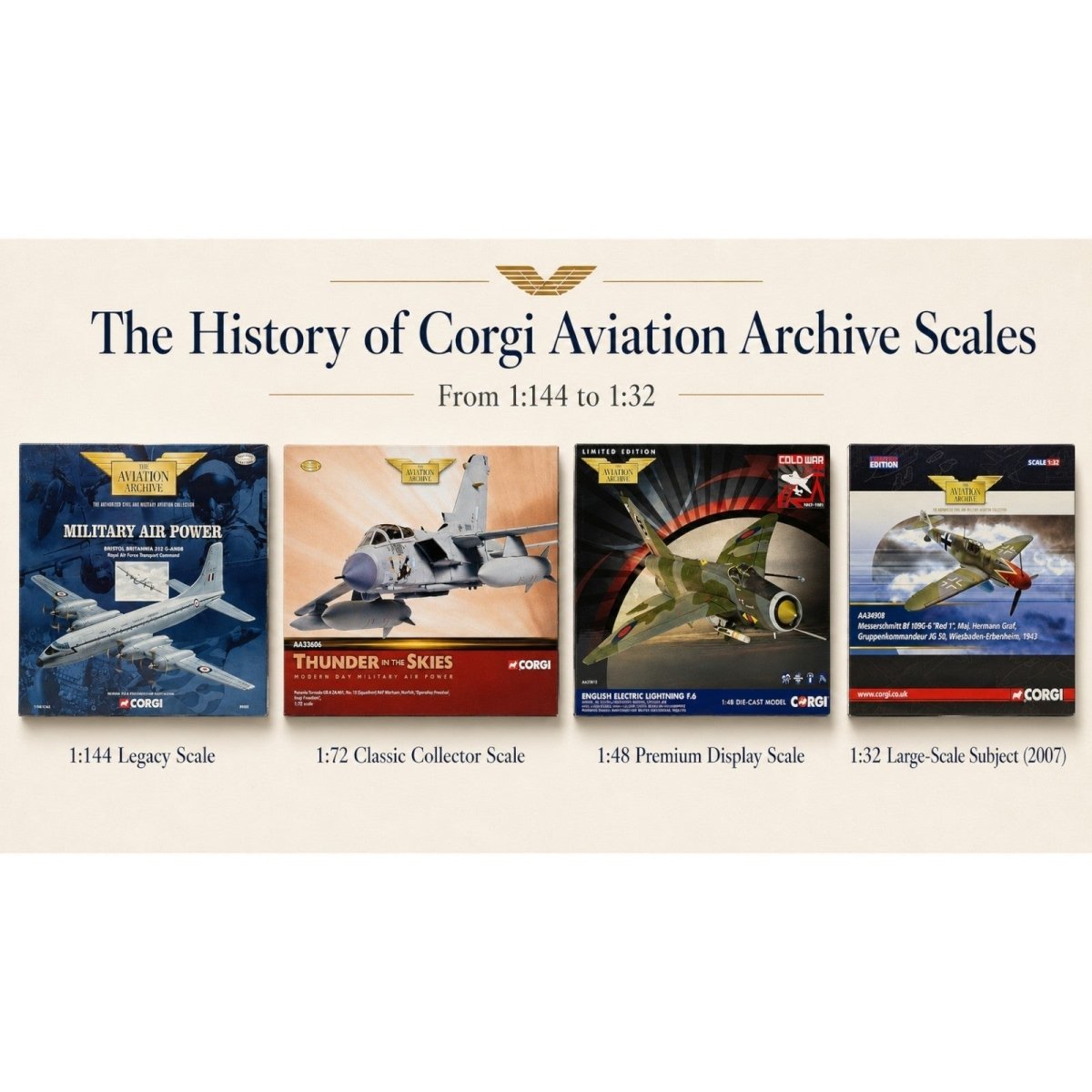
Hobby Master uses a few different scales, with 1:72 being the core for aircraft.
1:72 Scale
-
The main scale for the Air Power Series.
-
Ideal for modern jets and WW2 fighters - large enough for detailed panel lines, weapon loads and cockpit work, yet still easy to display in squadrons or wings.
-
Hobby Master also produces some larger aircraft in 1:72, including certain bombers and transport types, where the bigger scale allows for more surface detail, interior features and sharper markings.
1:48 Scale
-
Used on selected prop aircraft and fighters where a larger centrepiece model is desired and roughly twice the size of 1:72, giving each model more presence in a cabinet or on a shelf.
-
Allows for extra surface and cockpit detail, clearer panel lines, cockpit instruments and small stencils stand out more at this scale.
-
Releases in 1:48 are usually fewer than in 1:72, they often feel like premium display pieces rather than models for building big squadrons.
-
Ideal if you prefer a smaller number of standout models, perfect for feature aircraft or favourites you want to highlight in your collection.
Other Scales
-
1:144 and smaller – sometimes used for heavy bombers or very large subjects, keeping them a practical size for display.
-
1:72 armour – in the Ground Power Series for tanks and vehicles.
If you already collect in a specific scale, it’s easy to slot Hobby Master pieces into an existing display.
Typical Features of Hobby Master Models
Although details vary between toolings and release years, most Hobby Master aircraft share several collector-friendly features:
-
Diecast metal construction with plastic used for finer details and undercarriage.
-
Highly engraved panel lines and surface detail, especially on modern jets.
-
Accurate camouflage and markings, often with sharp tampo printing and small stencils.
-
Interchangeable parts on many releases:
-
Optional undercarriage (up or down).
-
Different weapon loads or fuel tanks.
-
Removable canopy sections on some models.
-
-
Pilot figures in many jets for an “in-flight” look.
-
Display stand, usually branded with the aircraft type, unit and scale.
-
Collector-style packaging, often with artwork, historical notes and basic specifications.
Because of the focus on weapon loads, pylon detail and panel lines, Hobby Master models tend to photograph very well and fit nicely into more realistic dioramas or cabinets.
Limited Editions and Release Style
Like many specialist diecast brands, Hobby Master typically releases models as limited production runs rather than permanent catalogue items.
-
Most models are released once and then retired.
-
Edition sizes vary but are usually printed on the box and/or collector card.
-
Once a run sells through at retail, that specific scheme can become hard to find.
This limited-run approach keeps the range fresh and gives collectors a clear sense of which schemes were produced for each aircraft type.
Subjects and Themes Covered by Hobby Master
Hobby Master is particularly strong in a few areas:
Modern Jets and Attack Aircraft
-
F-16 Fighting Falcon (including many aggressor schemes).
-
F-15 Eagle, F-18 Hornet/Super Hornet, F-14 Tomcat.
-
European types such as Tornado, Typhoon and Mirage.
-
Modern Russian and Chinese aircraft in selected releases.
Cold War & Late WW2 Subjects
-
Sabres, MiGs, Phantoms and other early jet fighters.
-
Late-war and post-war propeller aircraft.
-
Aircraft from NATO, Warsaw Pact and other air arms.
Special Schemes and Limited Markings
-
Airshow liveries and anniversary tails.
-
Aggressor/adversary squadron schemes.
-
Operation-specific markings and commemorative schemes.
If you’re interested in modern air forces, aggressor units or highly detailed jet tooling, Hobby Master is one of the main brands collectors look at.
Condition, Boxes and What Collectors Look For
As with other diecast aircraft brands, condition matters to many Hobby Master collectors.
Model Condition
Collectors often check for:
-
Paint chips, scratches or rubbing, especially on leading edges and nose radomes.
-
Decal or tampo issues such as cracking, lifting or mis-alignment.
-
Broken or missing small parts: pitot tubes, antennas, weapon pylons, undercarriage legs.
-
Signs of heavy handling or repairs, such as visible glue or repainted areas.
Even with minor flaws, certain schemes can remain very desirable, especially if they’re long retired or depict a well-known aircraft.
Packaging and Accessories
The box and all accessories help complete the package:
-
Outer box condition (creases, crushing, price stickers).
-
Blister inserts and internal packaging.
-
Stands, alternative weapons, undercarriage parts and any paperwork or leaflets.
A model with all accessories present and a tidy box tends to appeal to more collectors and is easier to store safely.
Why Collectors Choose Hobby Master
Hobby Master tends to appeal to collectors who want:
-
High detail on modern jets – engraved panel lines, realistic weapon loads and accurate schemes.
-
A wide selection of contemporary and Cold War aircraft, including subjects under-represented by other brands.
-
Display flexibility – options for gear up/down, with or without weapons, and pilots in the cockpit.
-
Consistent quality in a scale that fits well into cabinets and shelves.
For many aviation enthusiasts, Hobby Master models sit alongside Corgi Aviation Archive and other brands to form a well-rounded collection that covers both classic and modern aircraft.
Building a Hobby Master Collection
There’s no single correct way to build a Hobby Master collection, but popular approaches include:
-
Focusing on one aircraft type (for example the F-16 or F-4) and tracking down different squadrons and schemes.
-
Collecting a particular air arm or nation, such as USAF, RAF, JASDF or NATO allies.
-
Building a themed display of aggressor and adversary aircraft, which Hobby Master is particularly strong in.
-
Combining Hobby Master jets with other brands in the same scale to fill historical gaps.
Whatever approach you take, Hobby Master’s variety of subjects and limited-run releases make it an engaging brand to collect.
Frequently Asked Questions
Are Hobby Master models still being produced?
Yes. Hobby Master continues to release new models each year, particularly in its Air Power Series. Older releases are frequently retired, so many earlier schemes are now only available on the secondary market.
What scales do Hobby Master aircraft come in?
Most Hobby Master aircraft are in 1:72 scale, especially in the Air Power Series. There are also selected releases in other scales such as 1:48 or 1:144, and 1:72 is commonly used for armour in the Ground Power Series.
Are Hobby Master models diecast metal or plastic?
Hobby Master aircraft are primarily diecast metal, with plastic used for finer details like undercarriage, antennas and weapons. This gives the models a solid feel while allowing sharp small parts.
Are Hobby Master models suitable as toys?
Hobby Master models are designed as collectors’ items and are usually recommended for ages 14 and up. They include delicate parts and small components, so they’re best treated as display pieces rather than toys.
Browse Hobby Master Diecast Aircraft
If you’d like to see what’s currently available, you can explore our Hobby Master range here:
- All Hobby Master aircraft models

Written by Jay Sawyer