
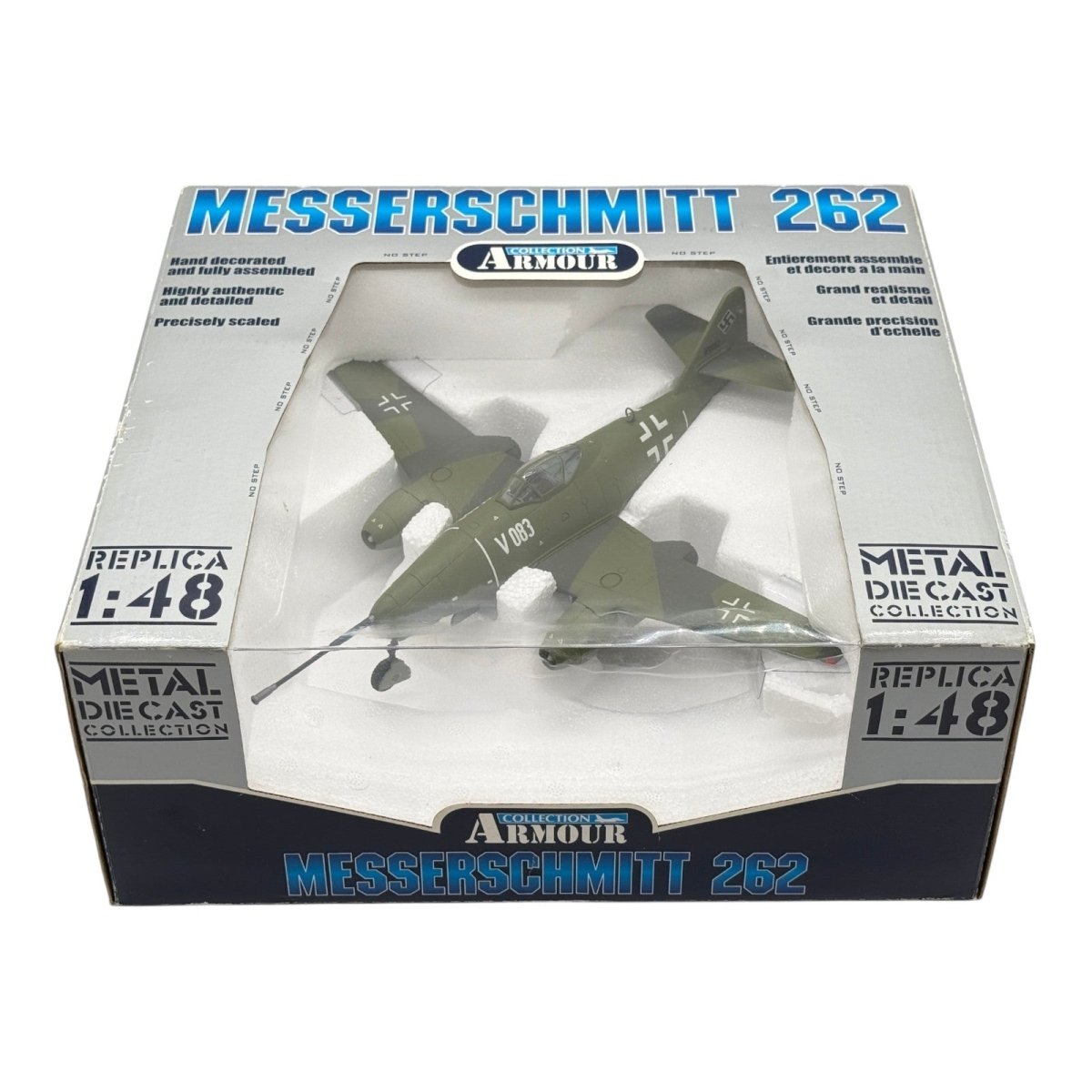
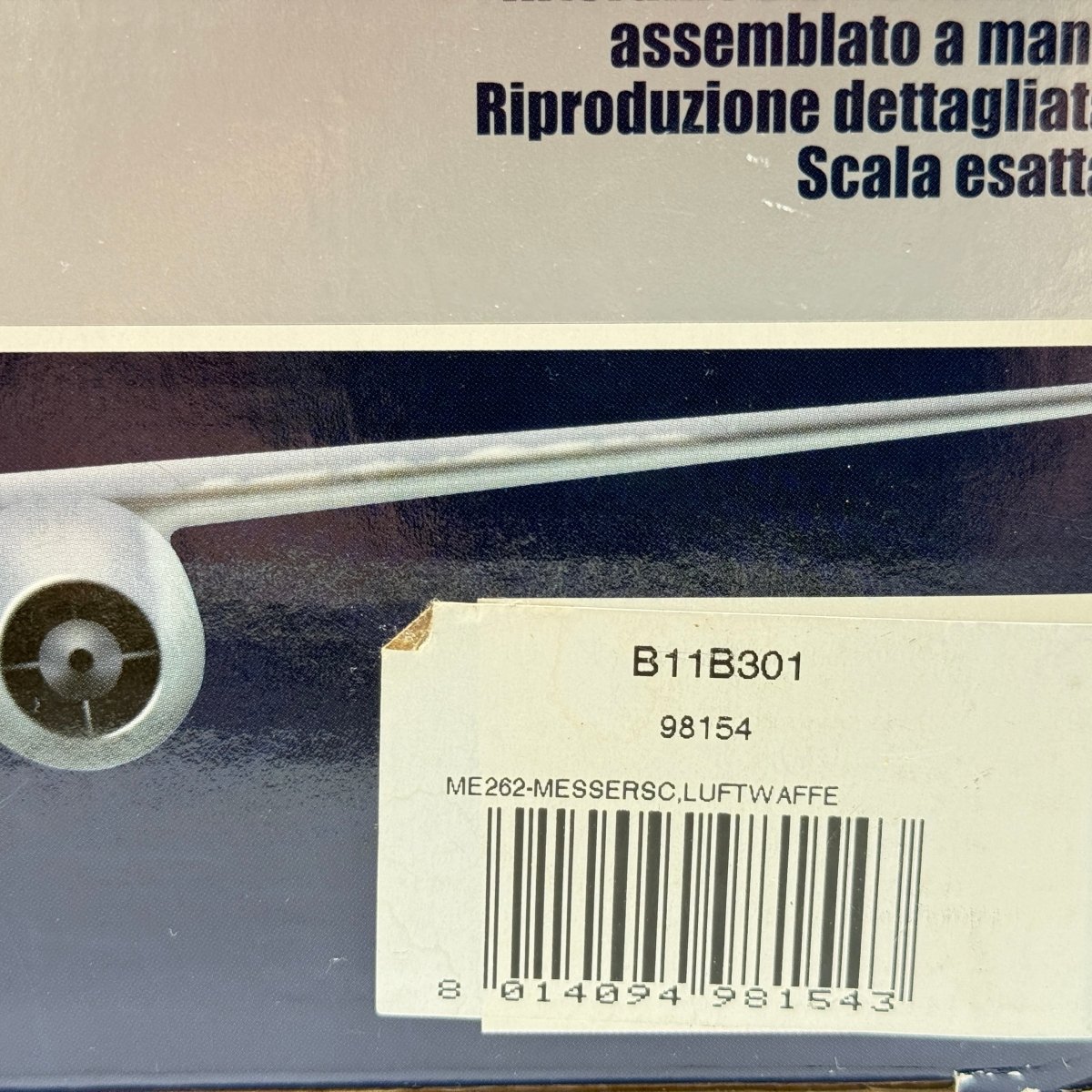
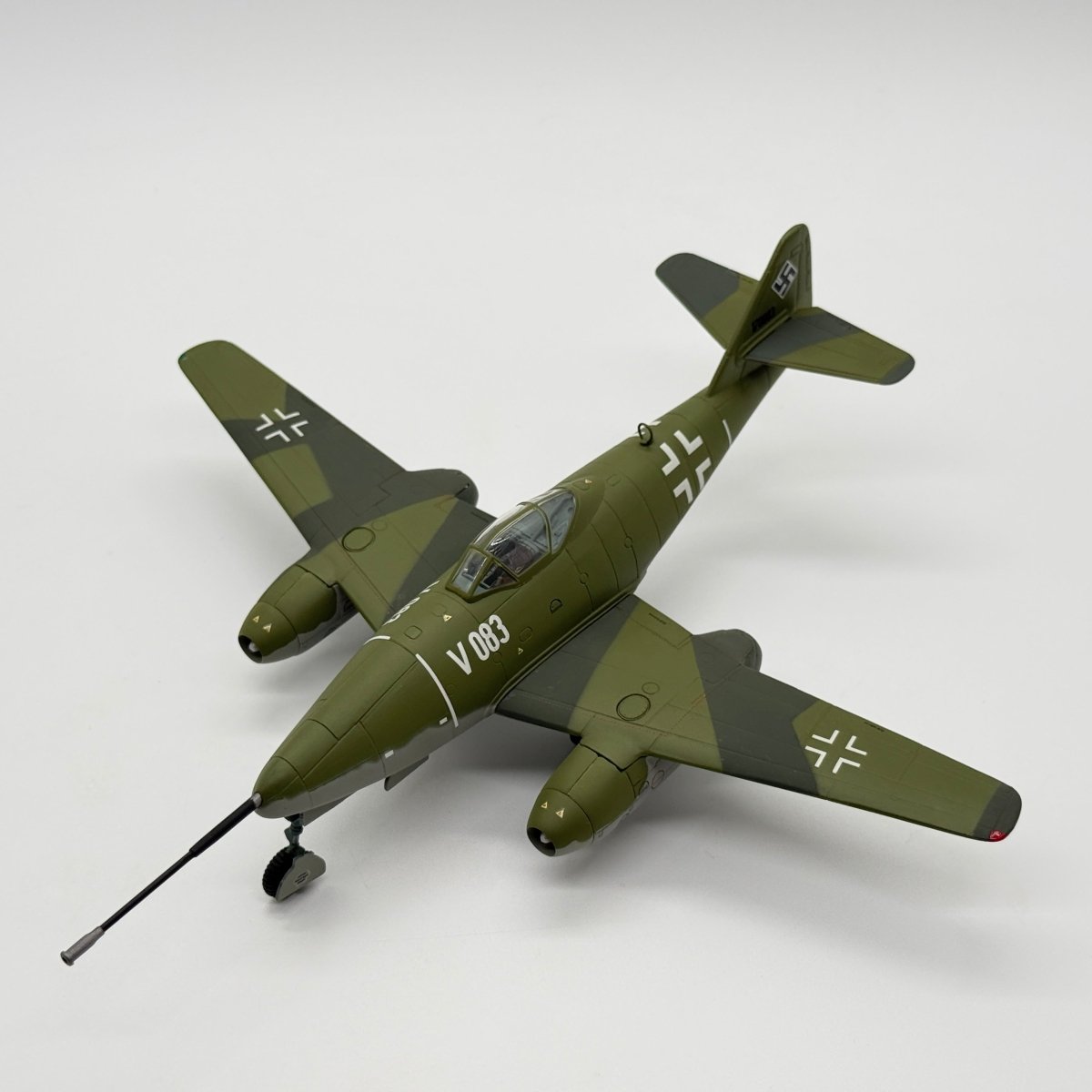
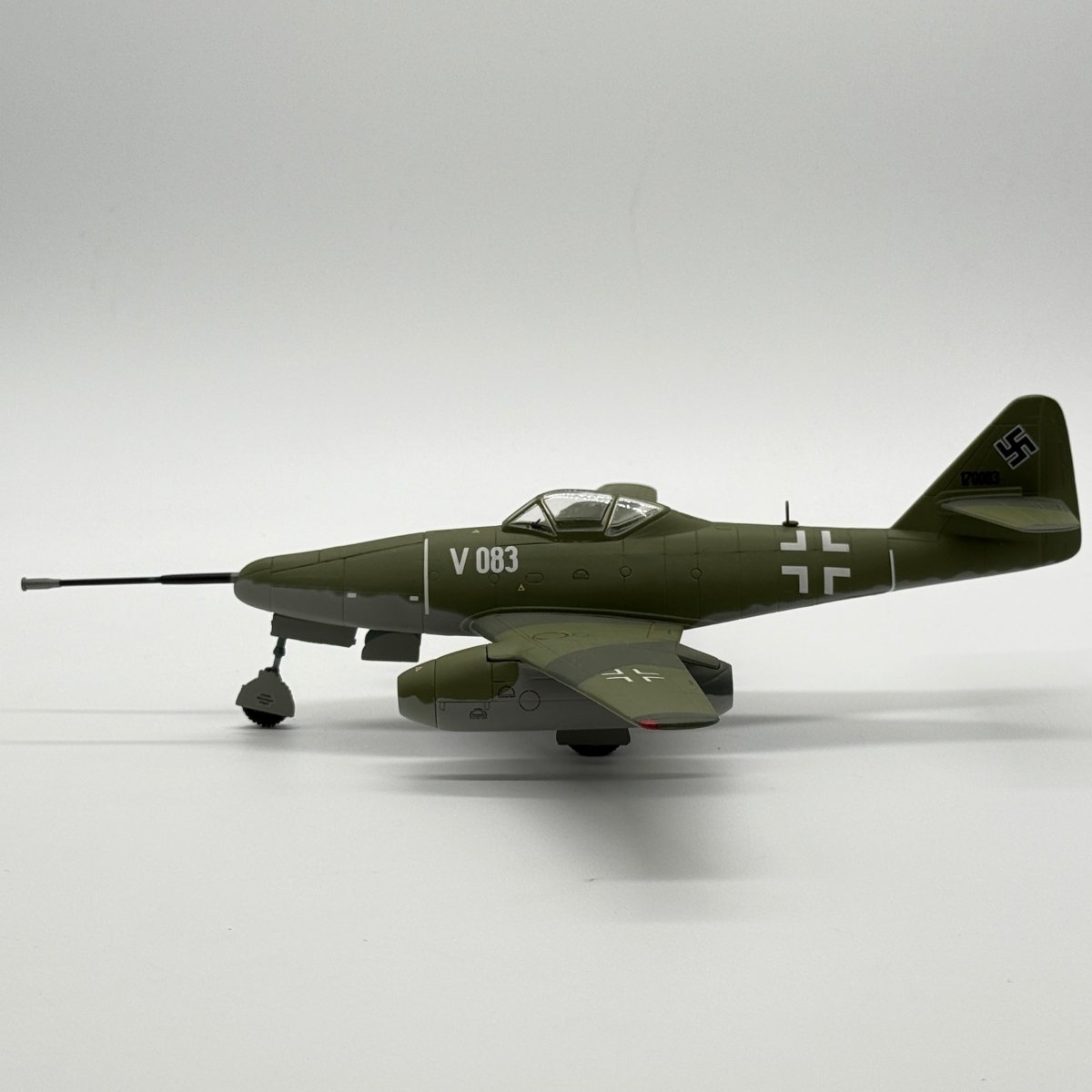
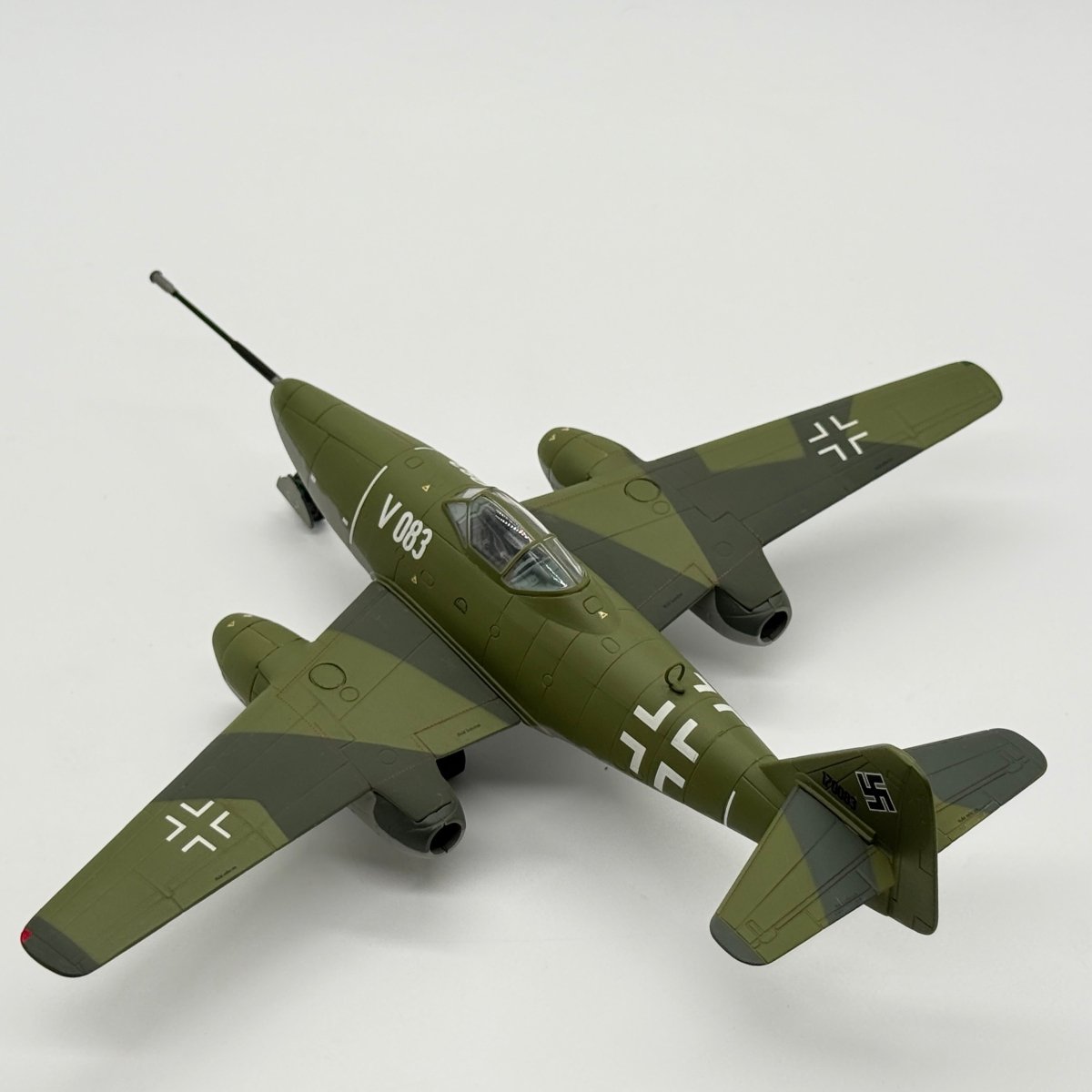
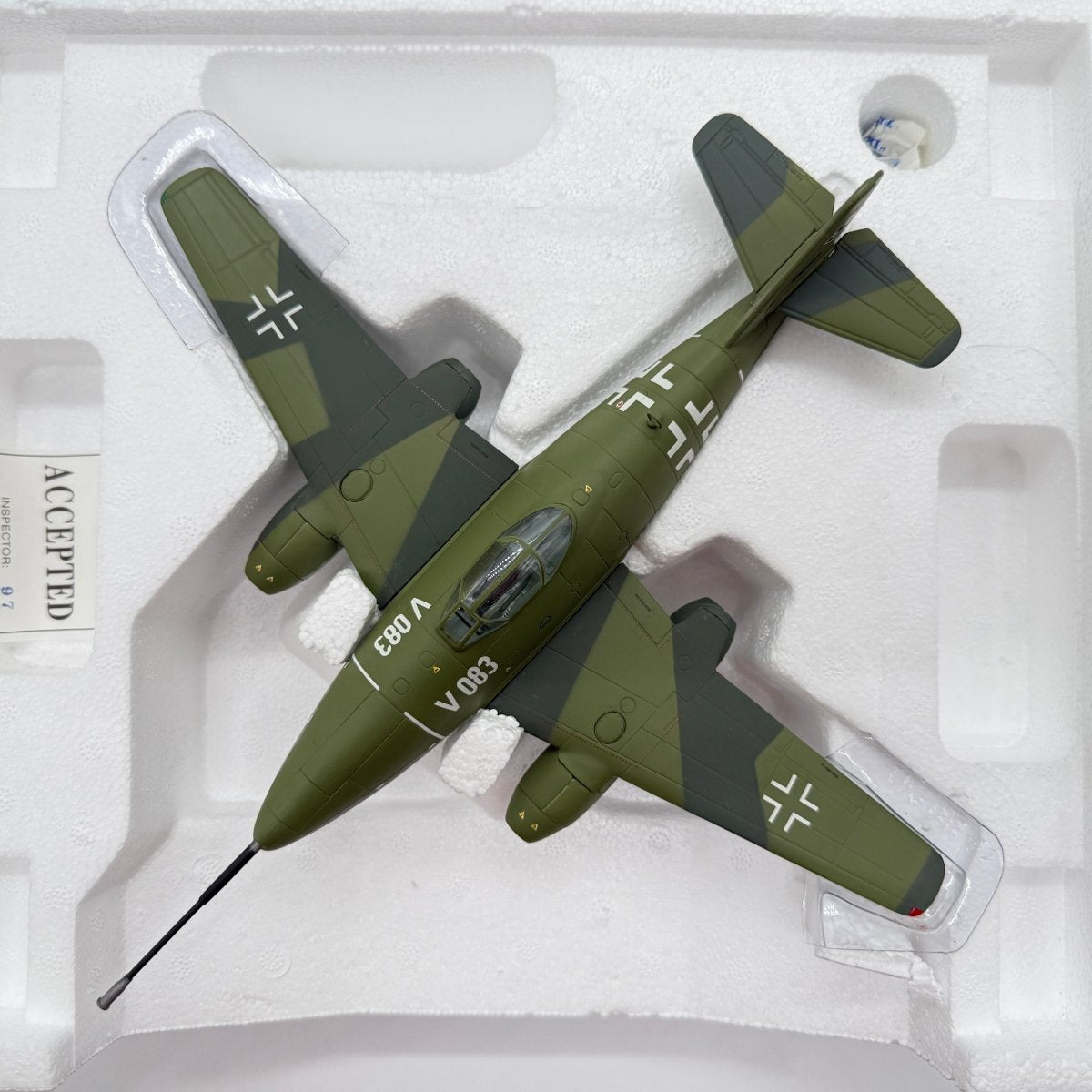
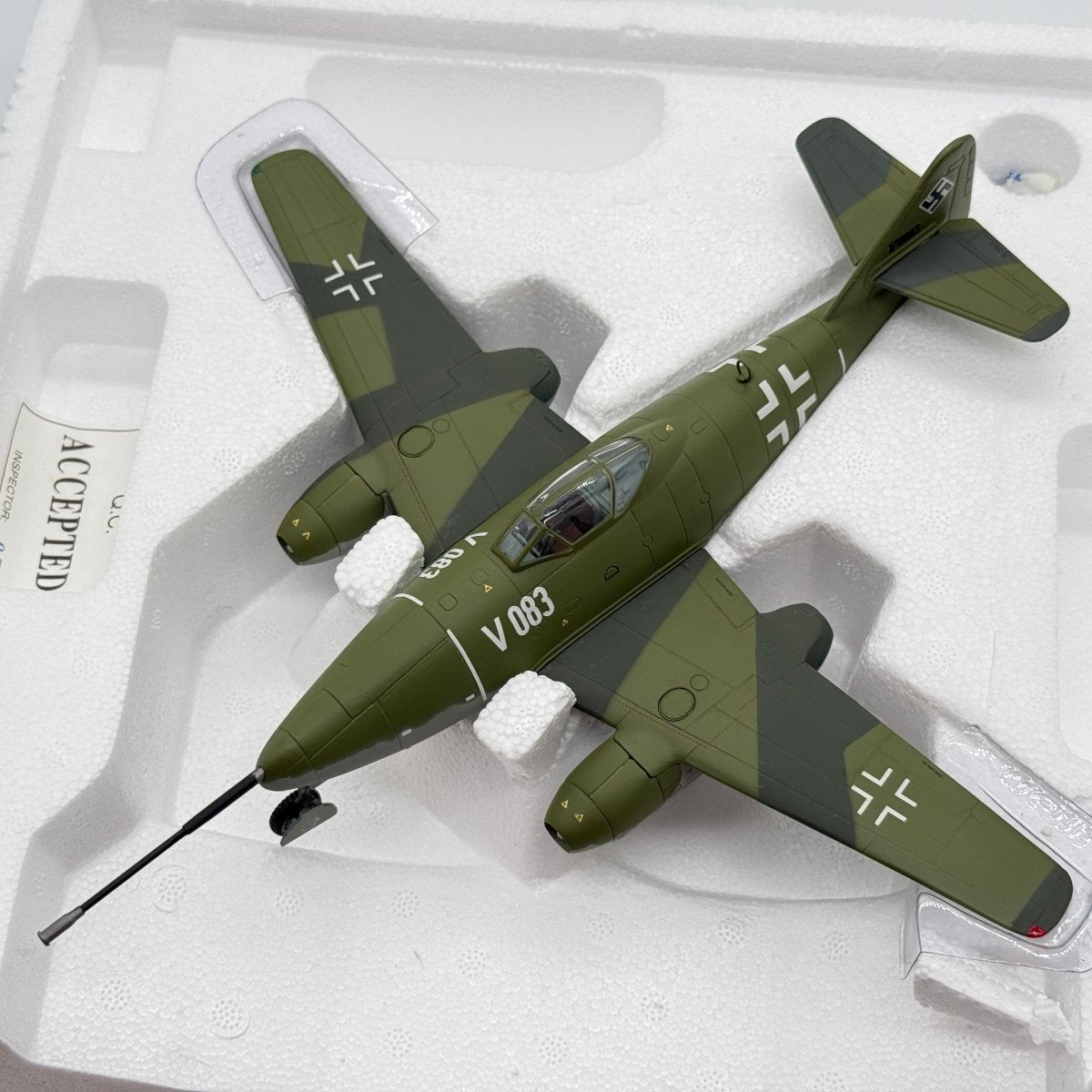
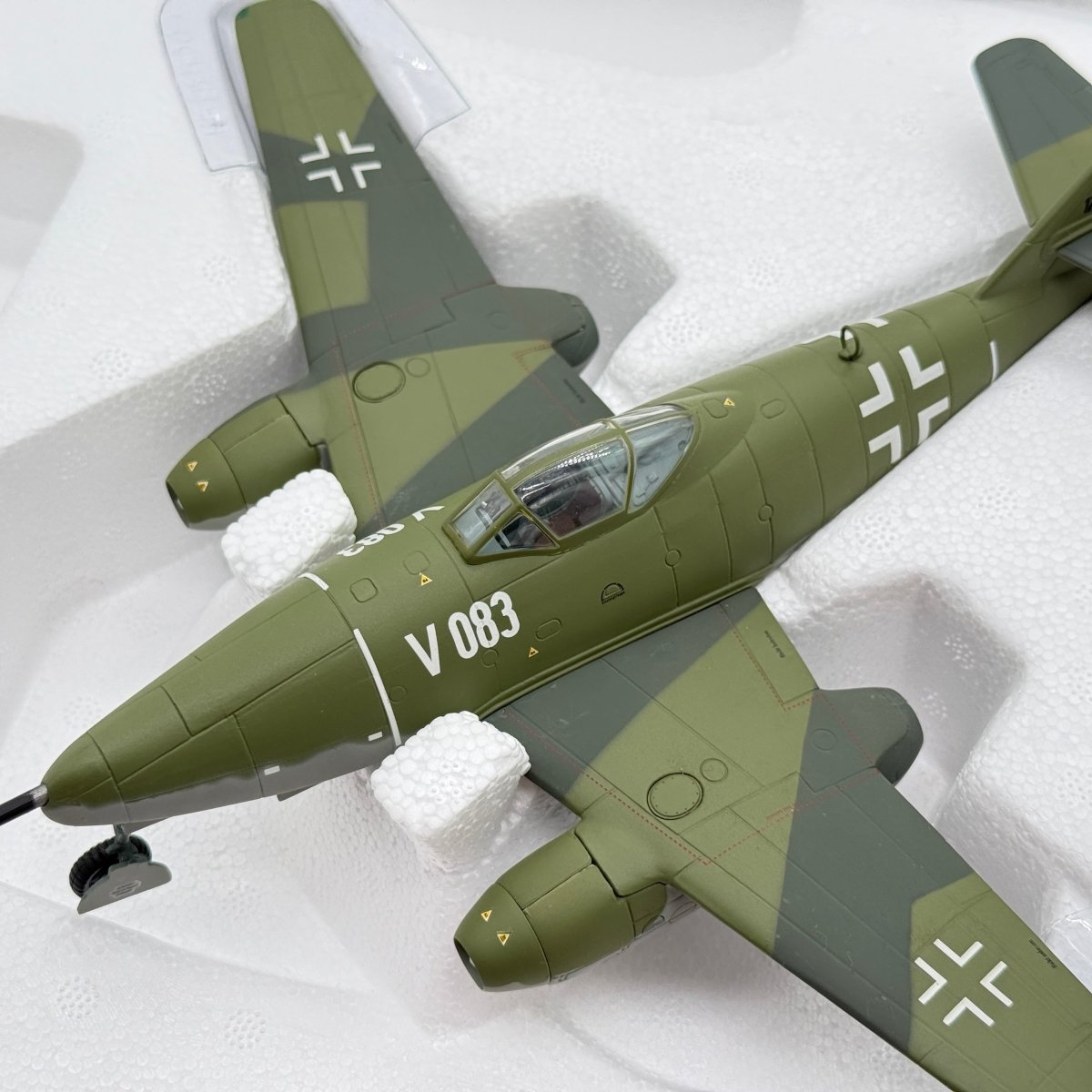
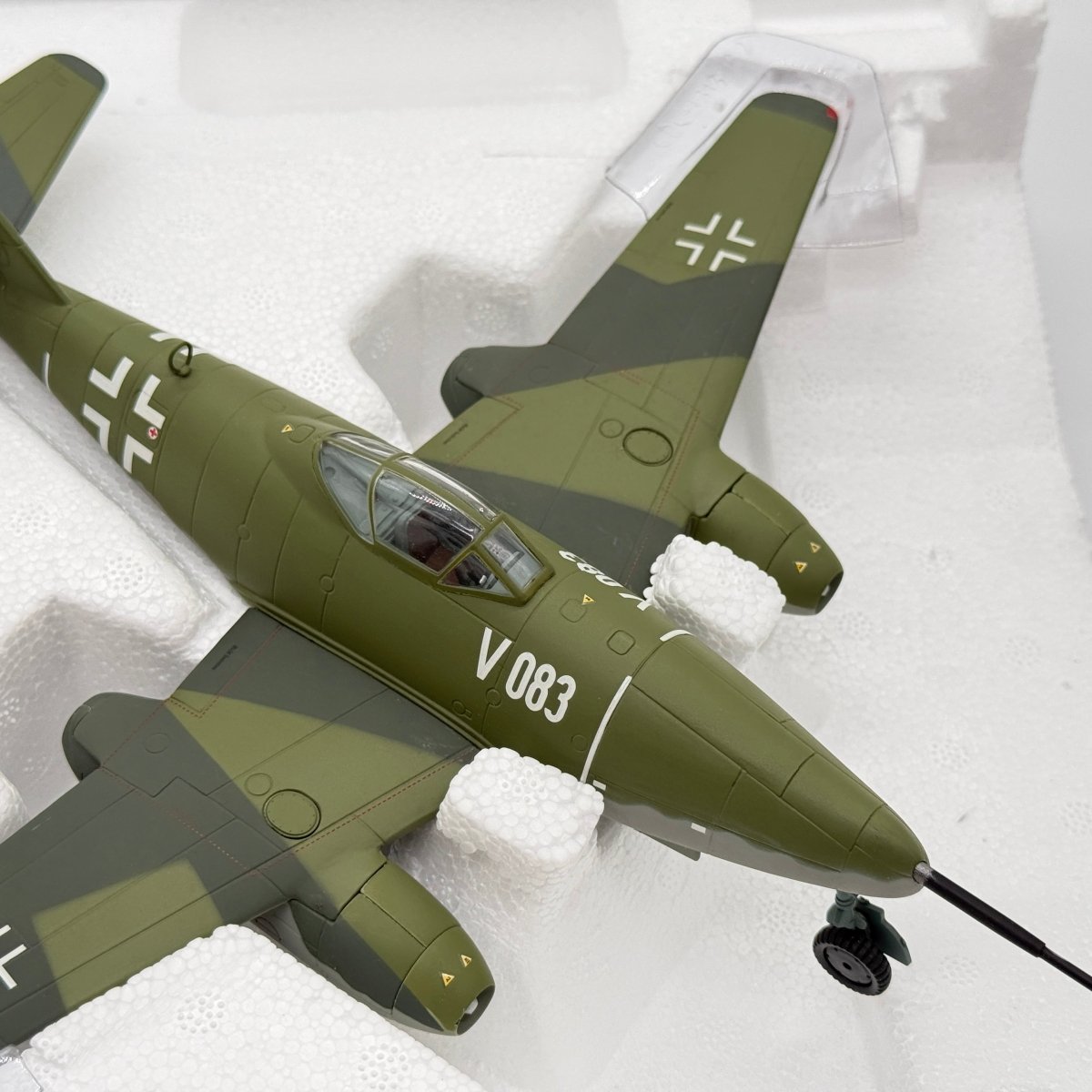
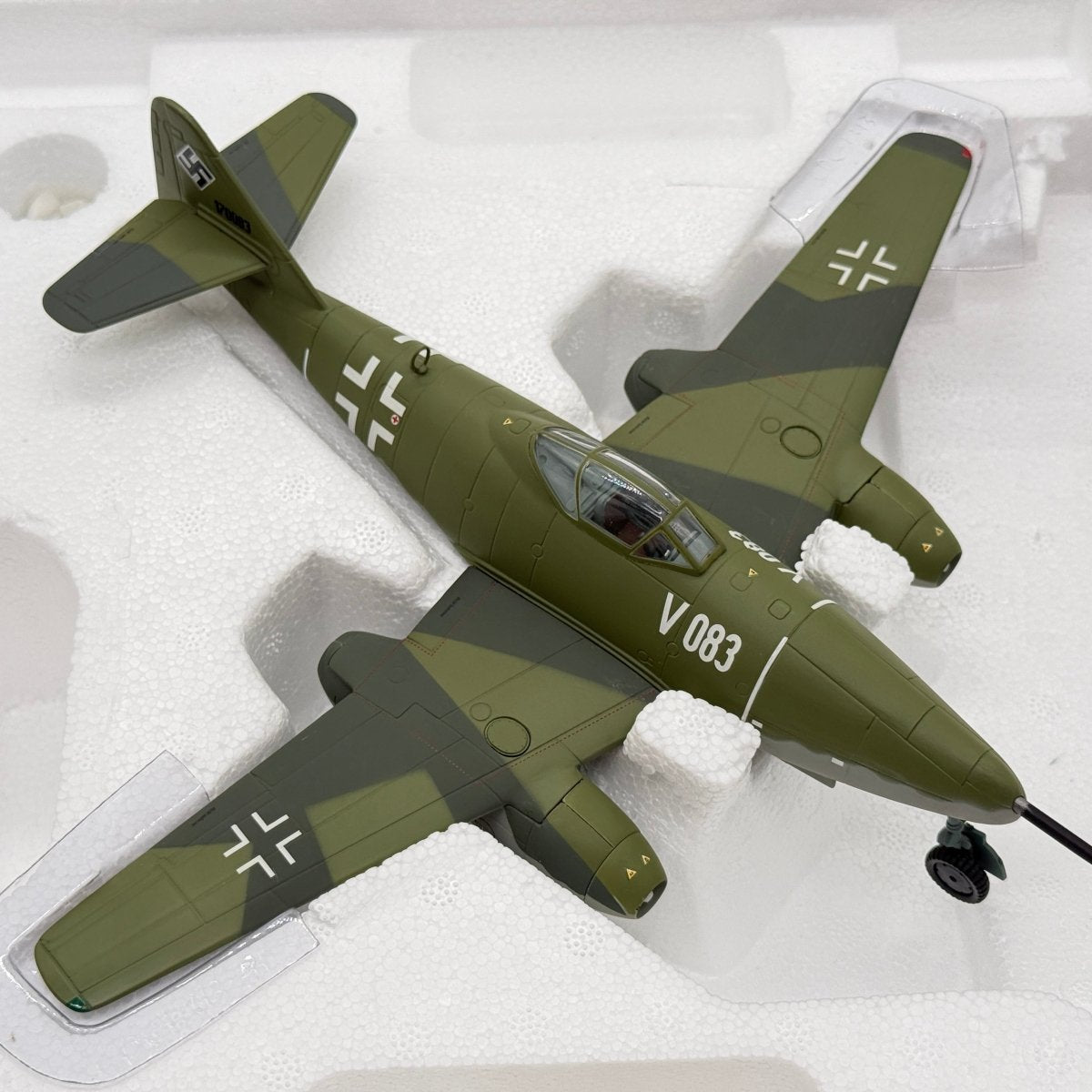
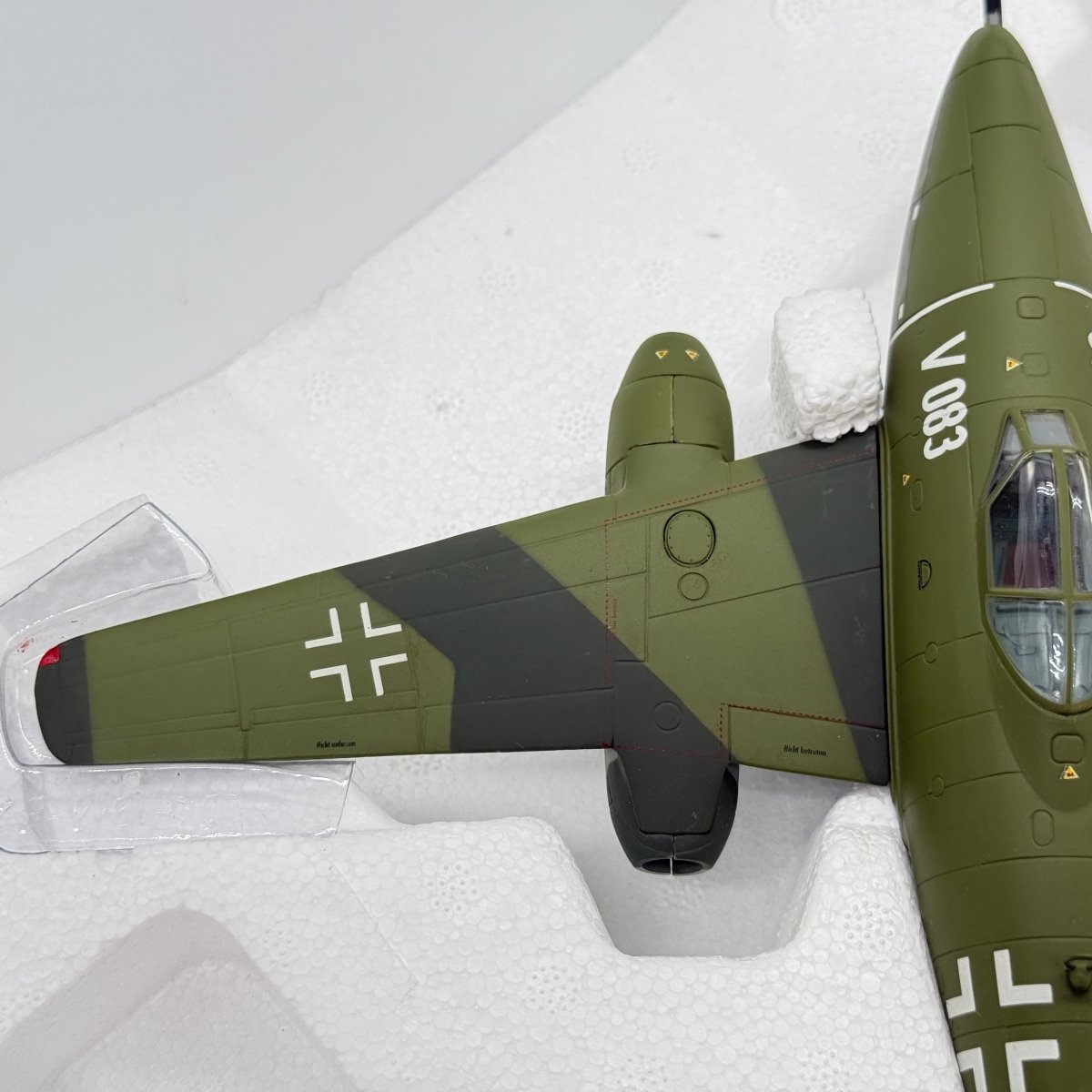
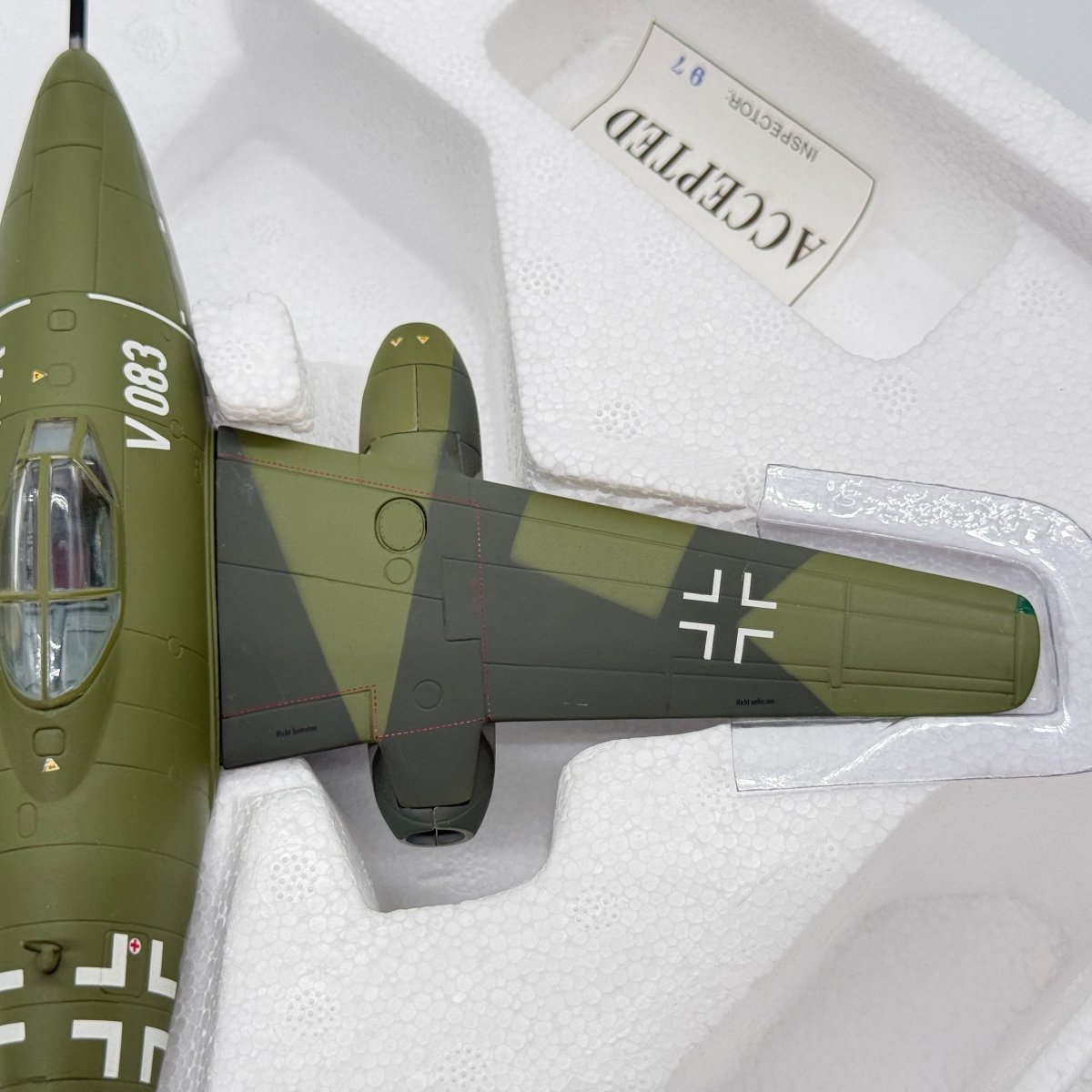
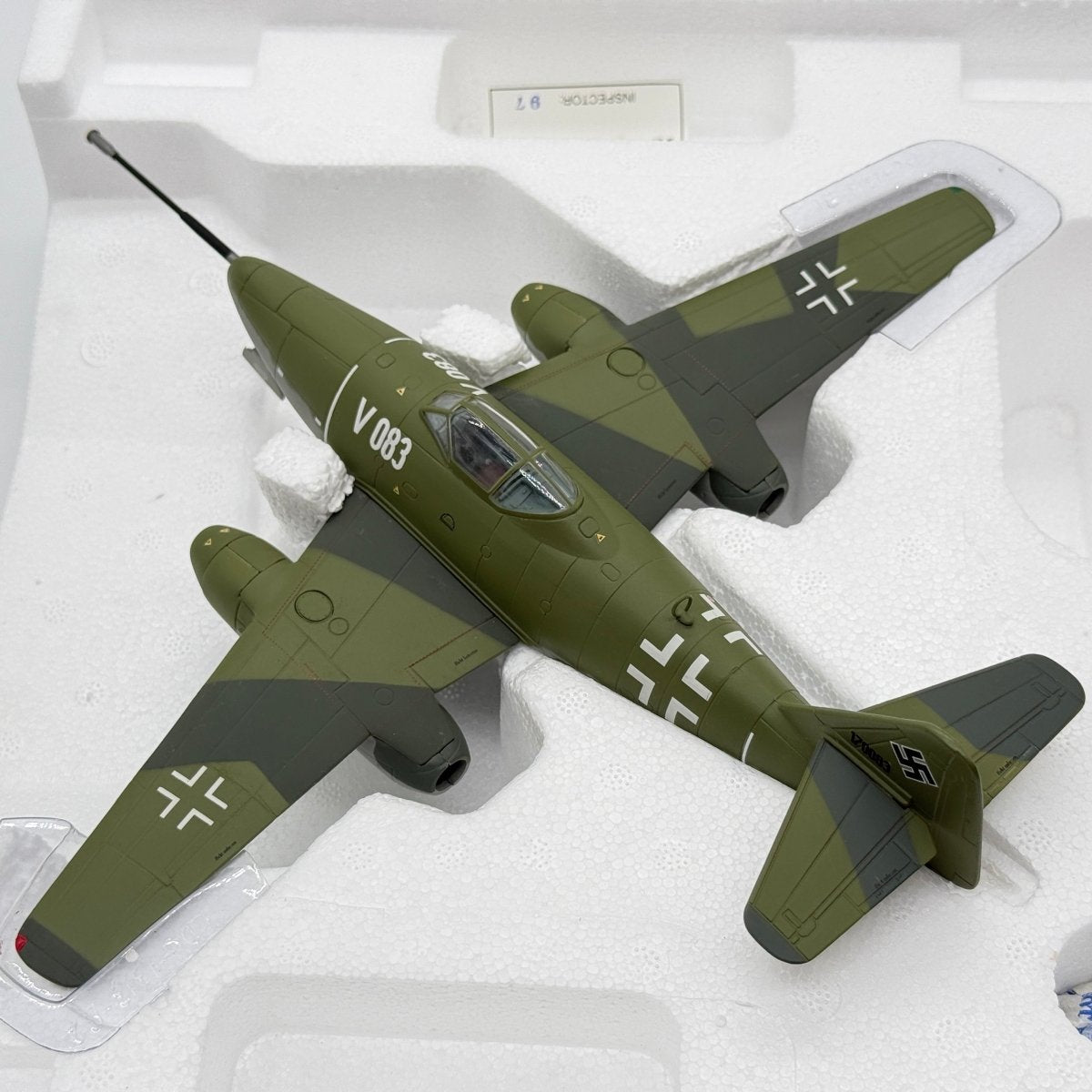
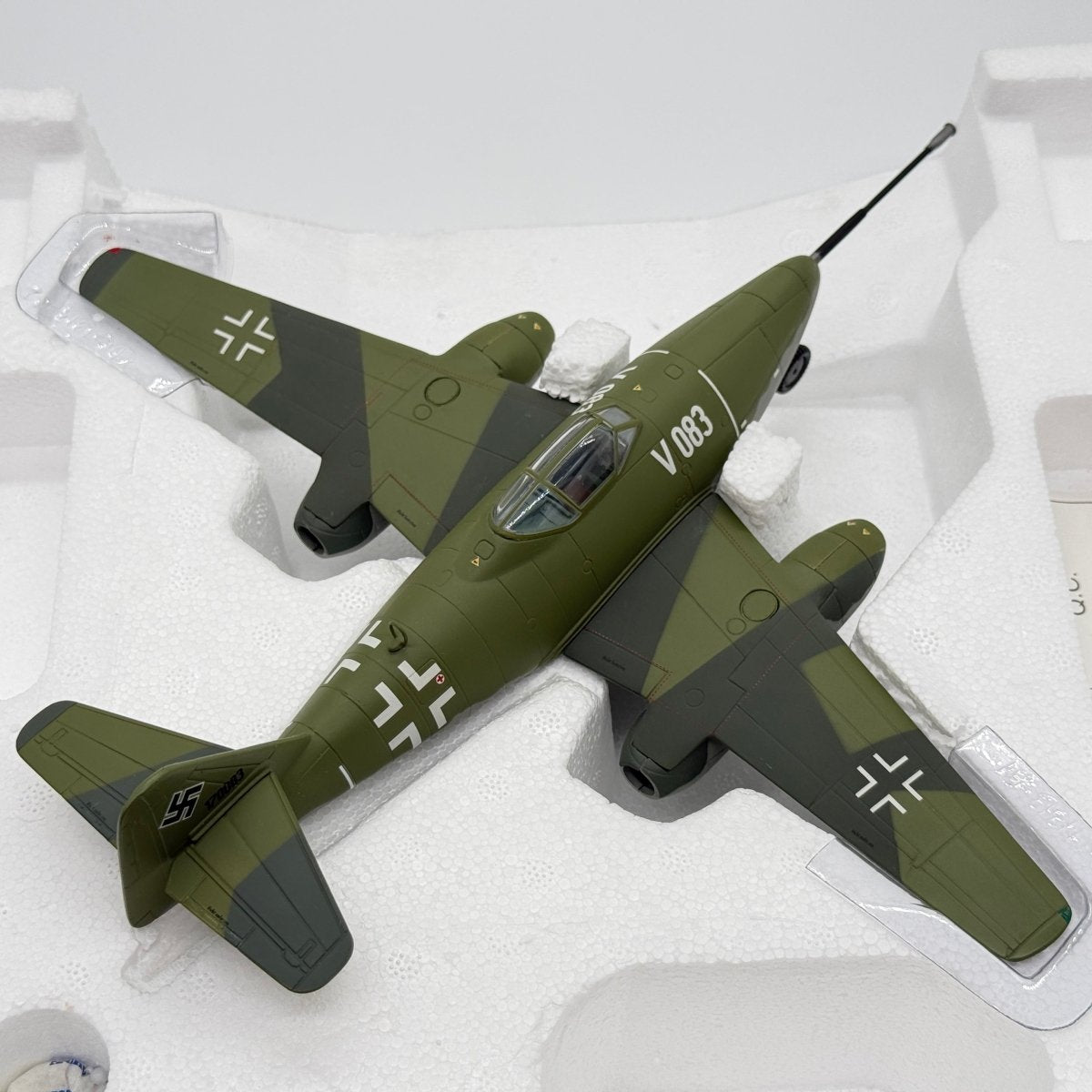
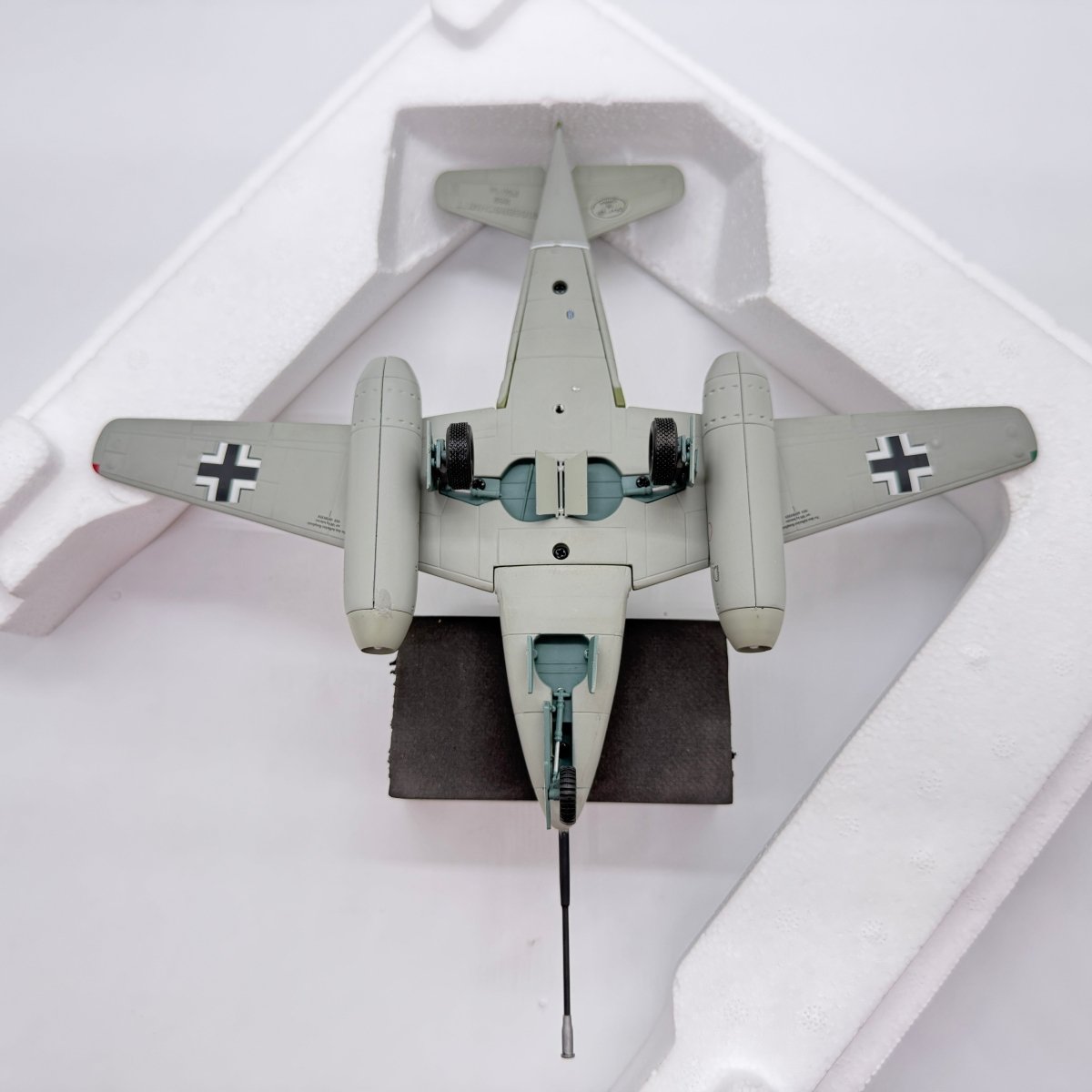
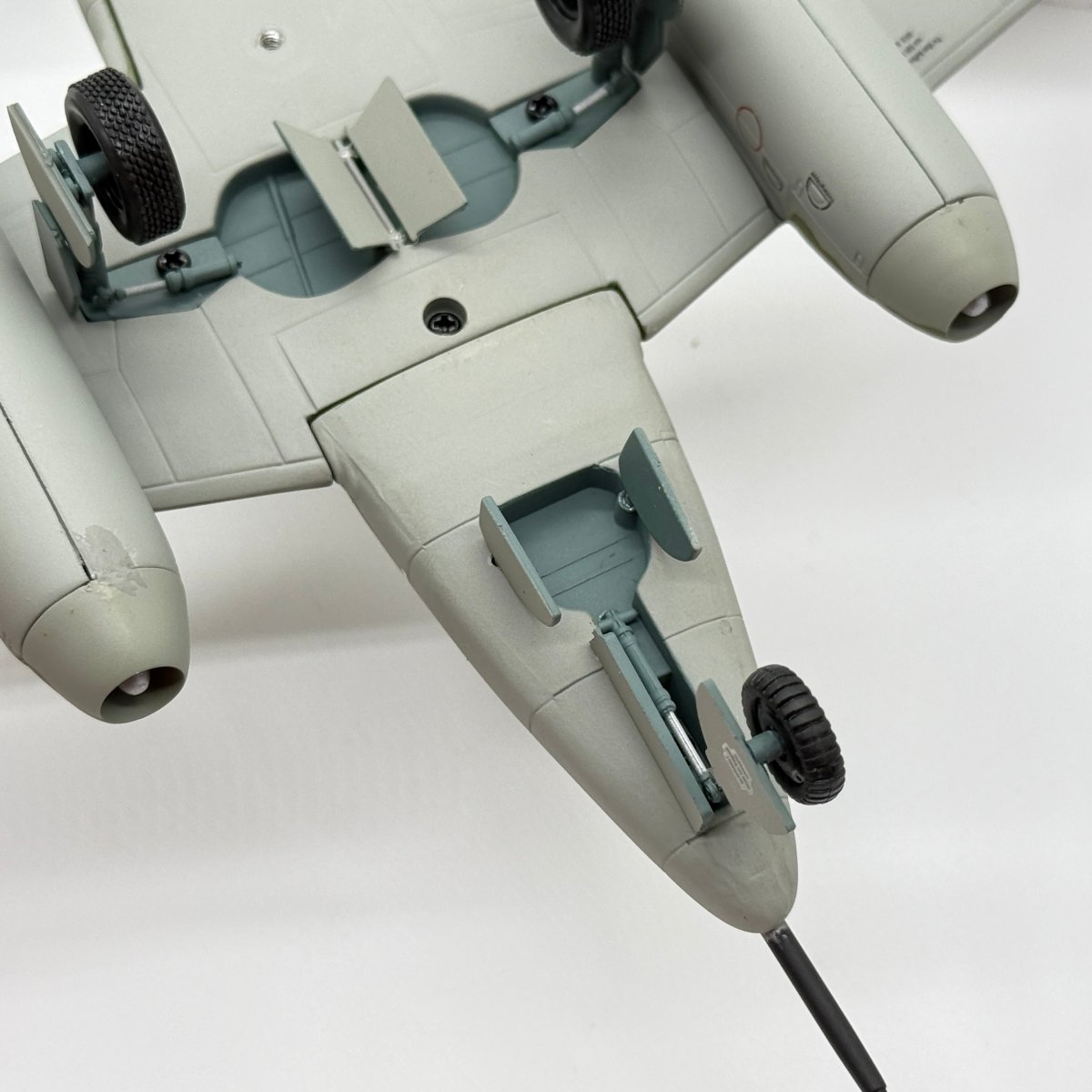

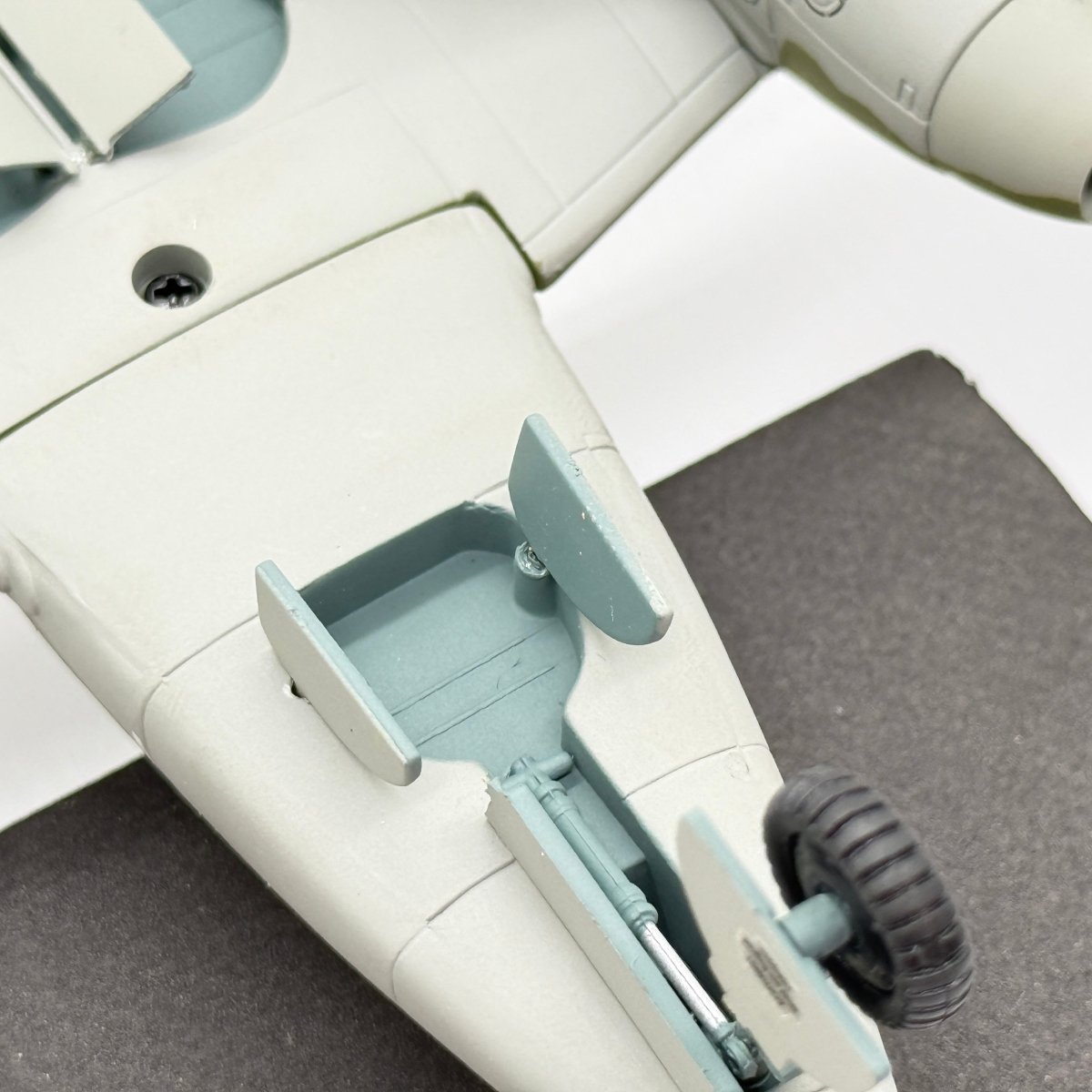
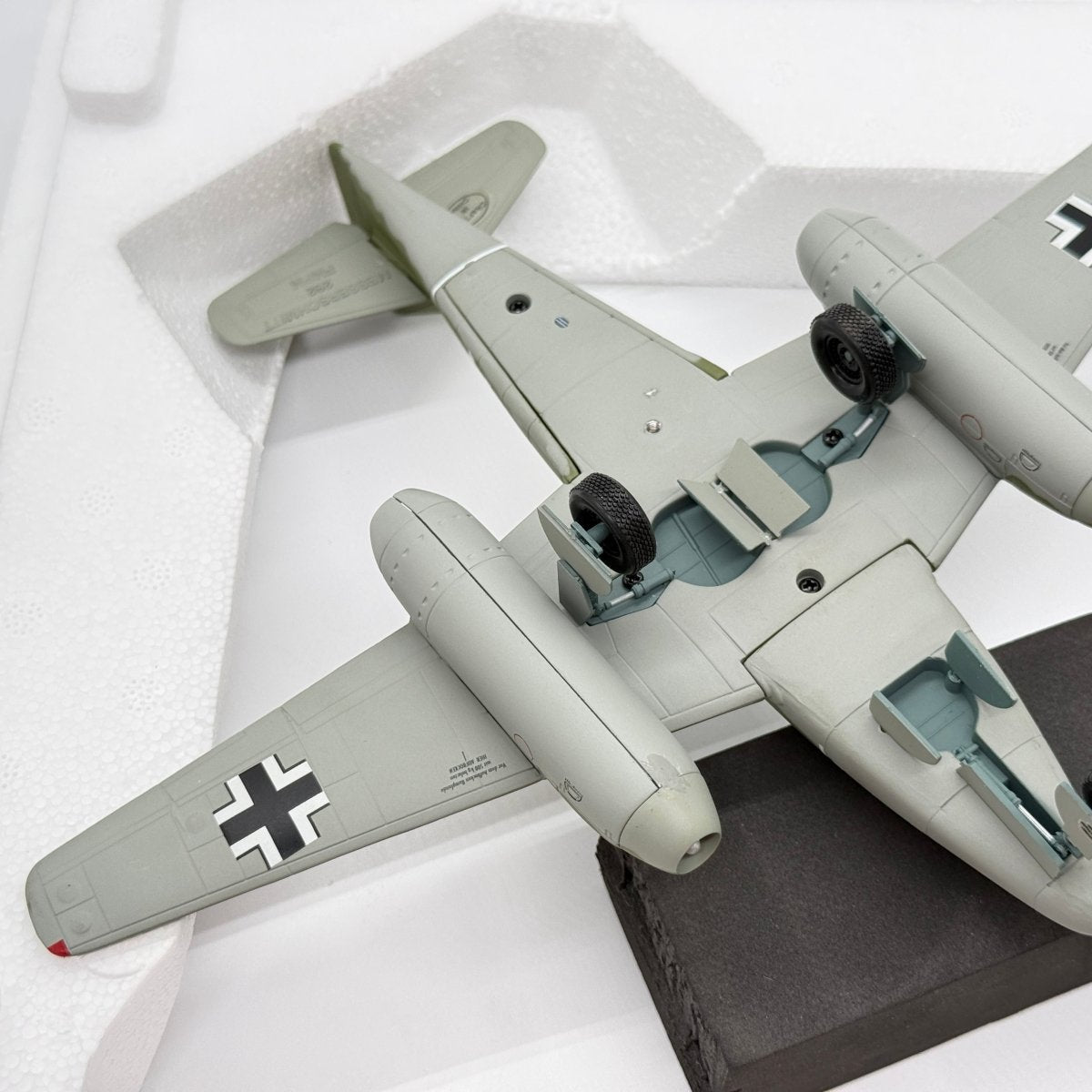
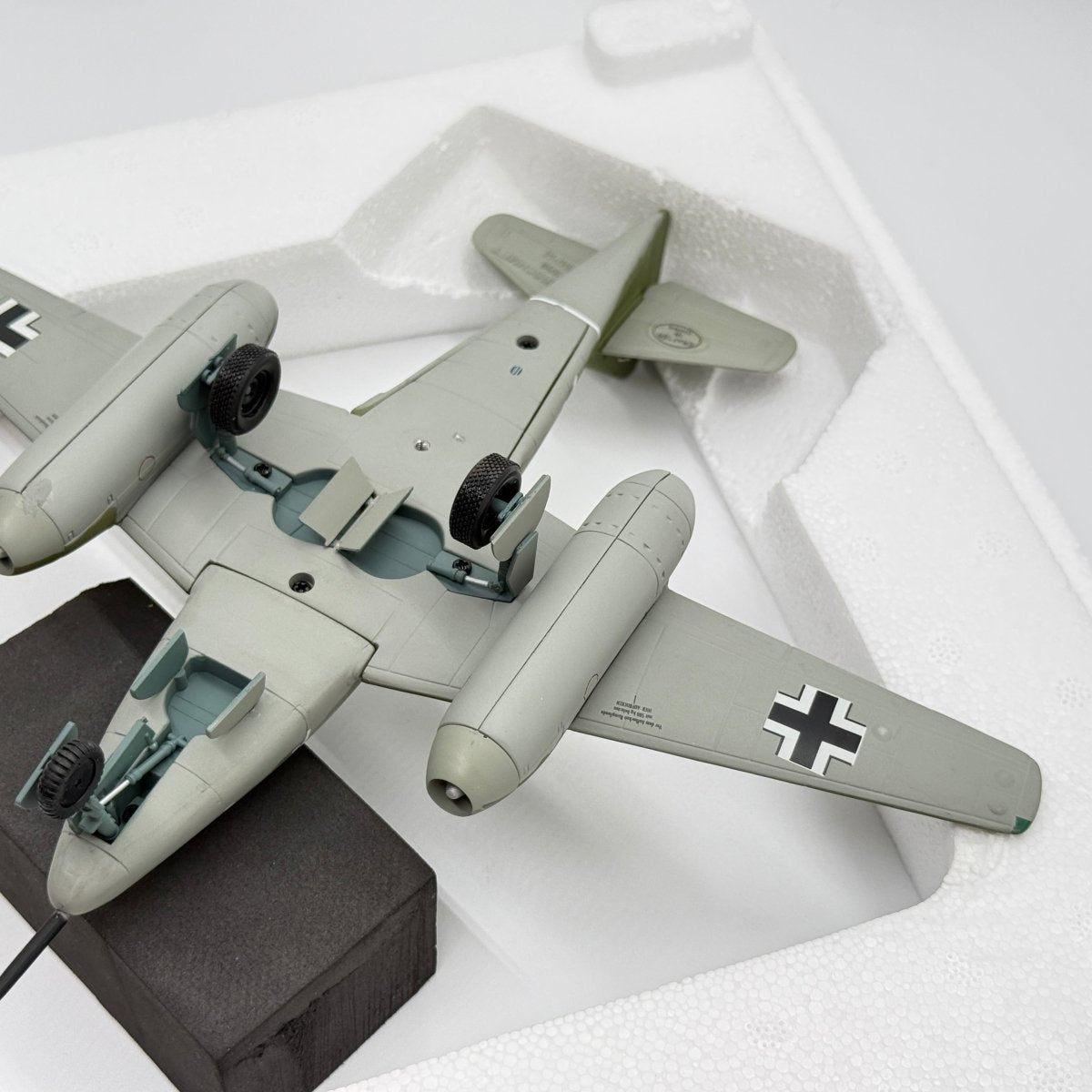
Franklin Mint B11B301 1:48 Messerschmitt Me 262A-1a/U4 V083 W.Nr.170083 Pulkzerstörer 50mm Cannon 1945
Duties & Taxes Prepaid Where Available
30-Day Returns
Condition summary
- Model condition
- Very Good (7/10)
- Box condition
- Excellent (8/10)
- Completeness
- See condition notes
- The model is in very good condition overall.
Full condition notes
Model condition
- The model is in very good condition overall.
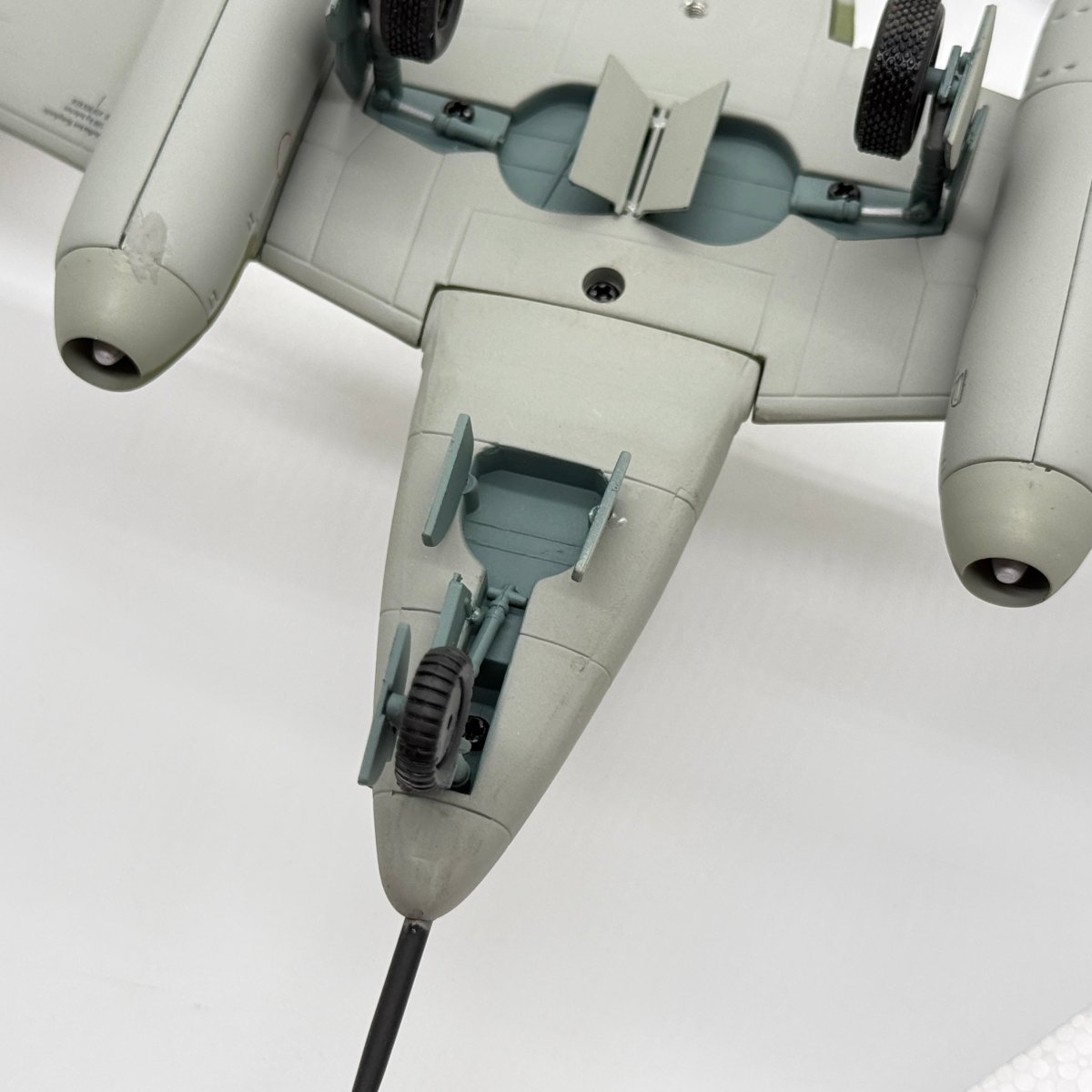
- A different coloured grey compound is present on the underside of one engine, although there does not appear to have been a repair made in this area.
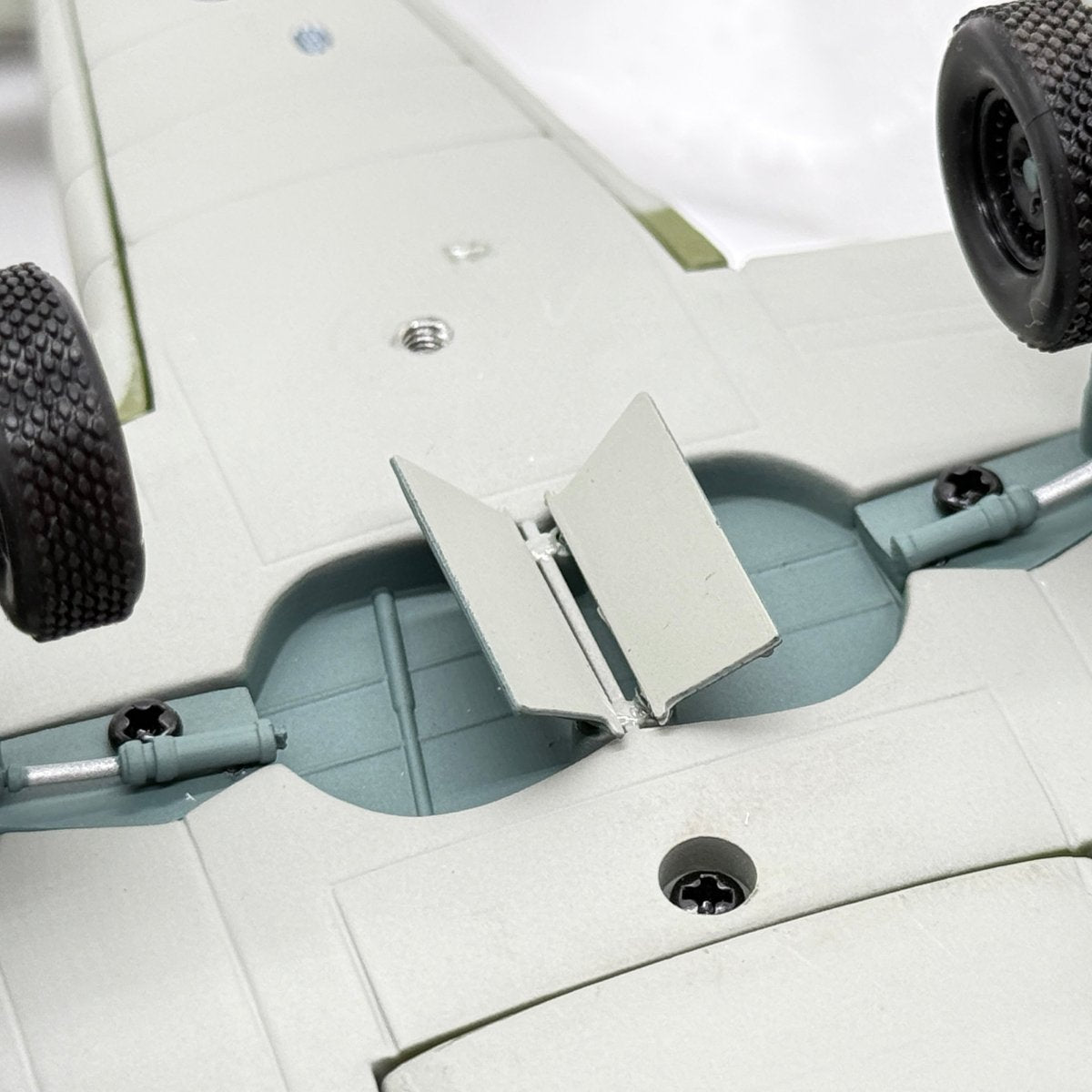
- The undercarriage doors are relatively loose and have some glue residue around them. It is difficult to confirm whether this is from manufacture or a previous repair.
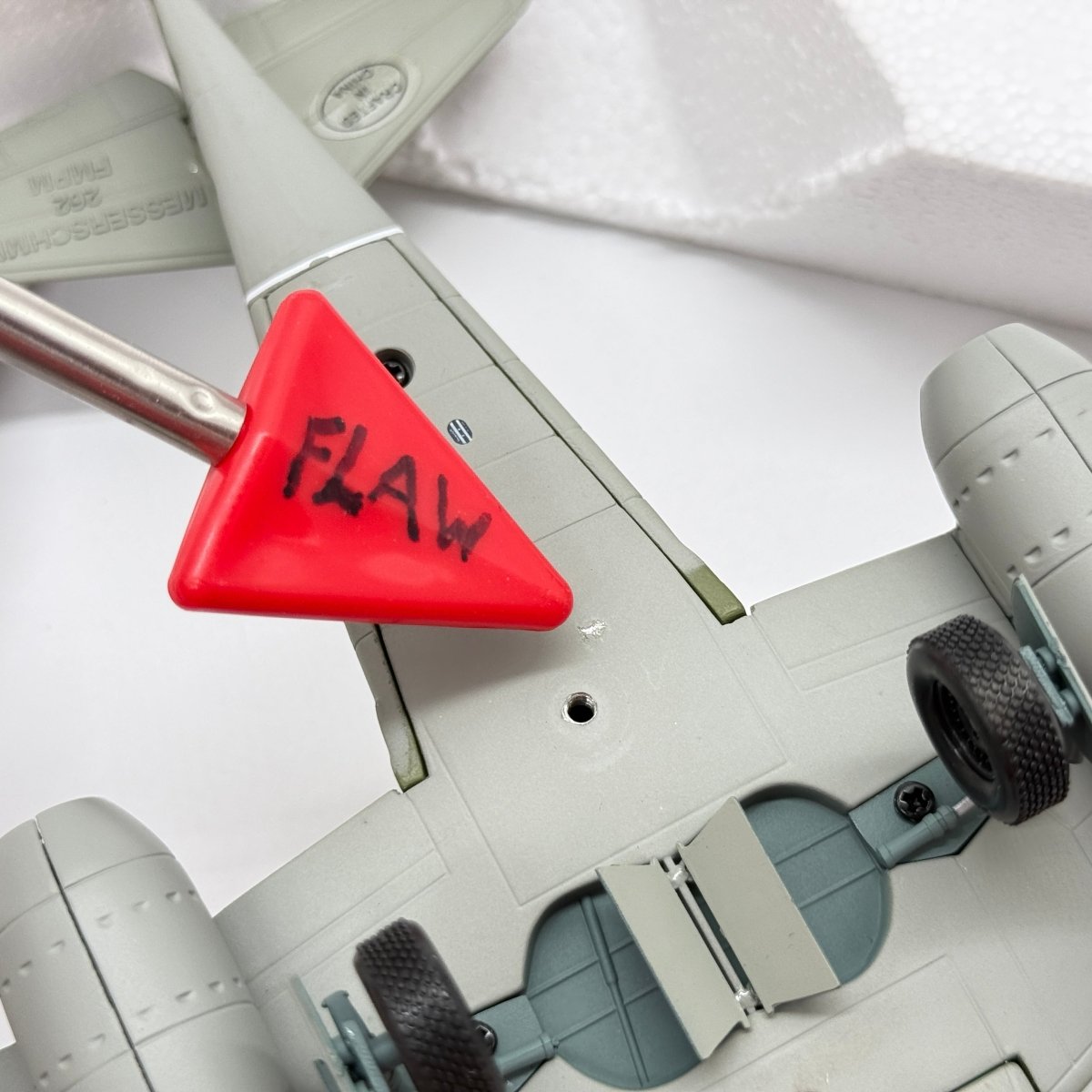
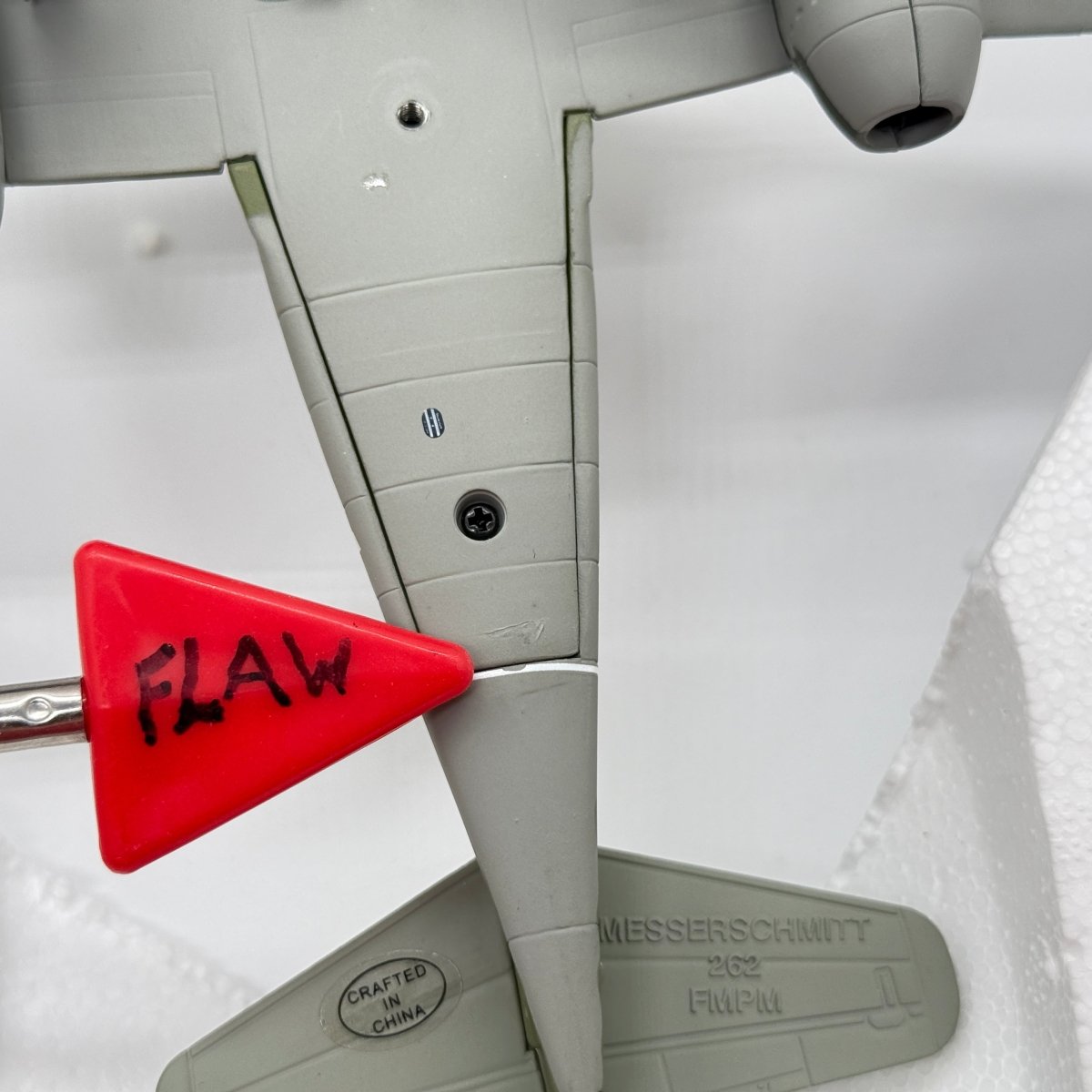
- Two scratch marks are present behind the screw point towards the tail section.
- The model remains screwed into the display base, keeping it secure.
- Despite the noted imperfections, the model still displays very well overall.
Box condition
- The box is in excellent condition for its age, with some light wear present to the edges.
Ships from the United Kingdom.
Estimated delivery to United Kingdom
Preparing delivery estimate…
Dates are estimates.
Estimate for this model. Combined postage is calculated in your cart.
International orders: Duties and import taxes are collected at checkout where available. If not collected, you may need to pay them, plus carrier handling fees, on delivery.

Choose options
Suggested links
Recently added models
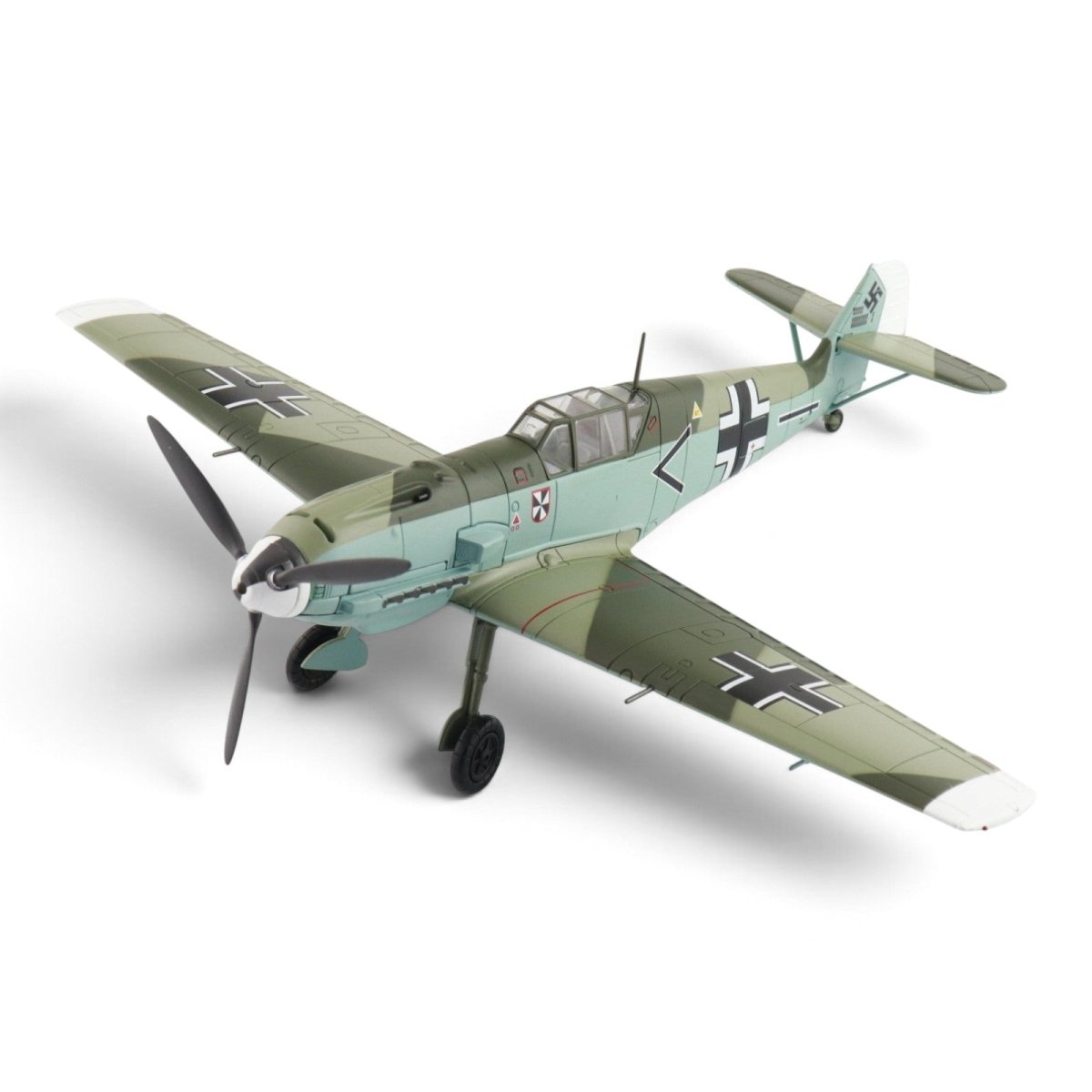
Hobby Master HA8722 1:48 Bf 109E-4 Franz von Werra II/JG3 Battle of Britain 1940New
Sale price£85.00 GBP
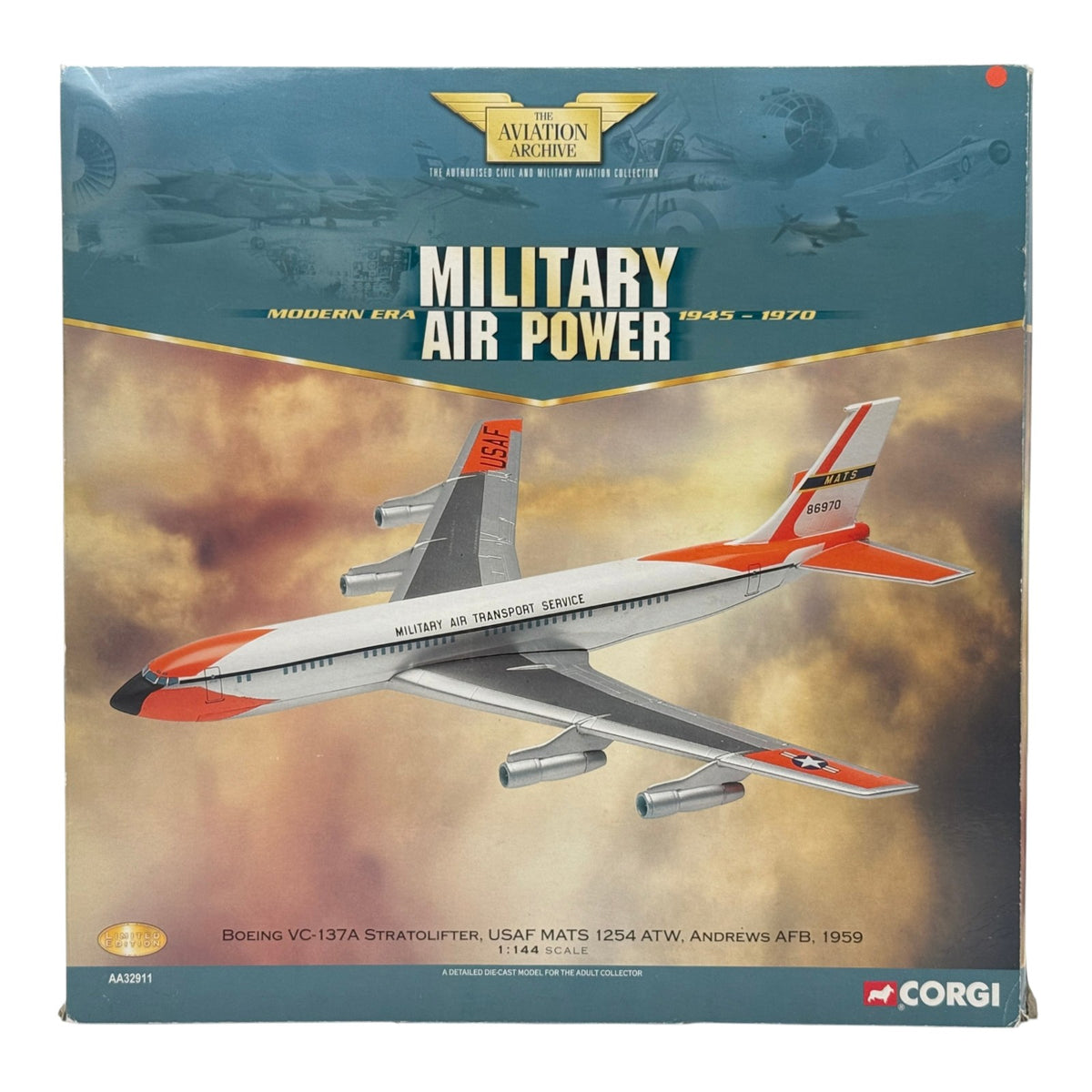
Corgi AA32911 1:144 Boeing VC-137A 58-6970 USAF MATS 1254 ATW Andrews AFB 1959Preowned - Excellent (8/10)
Sale price£35.00 GBP
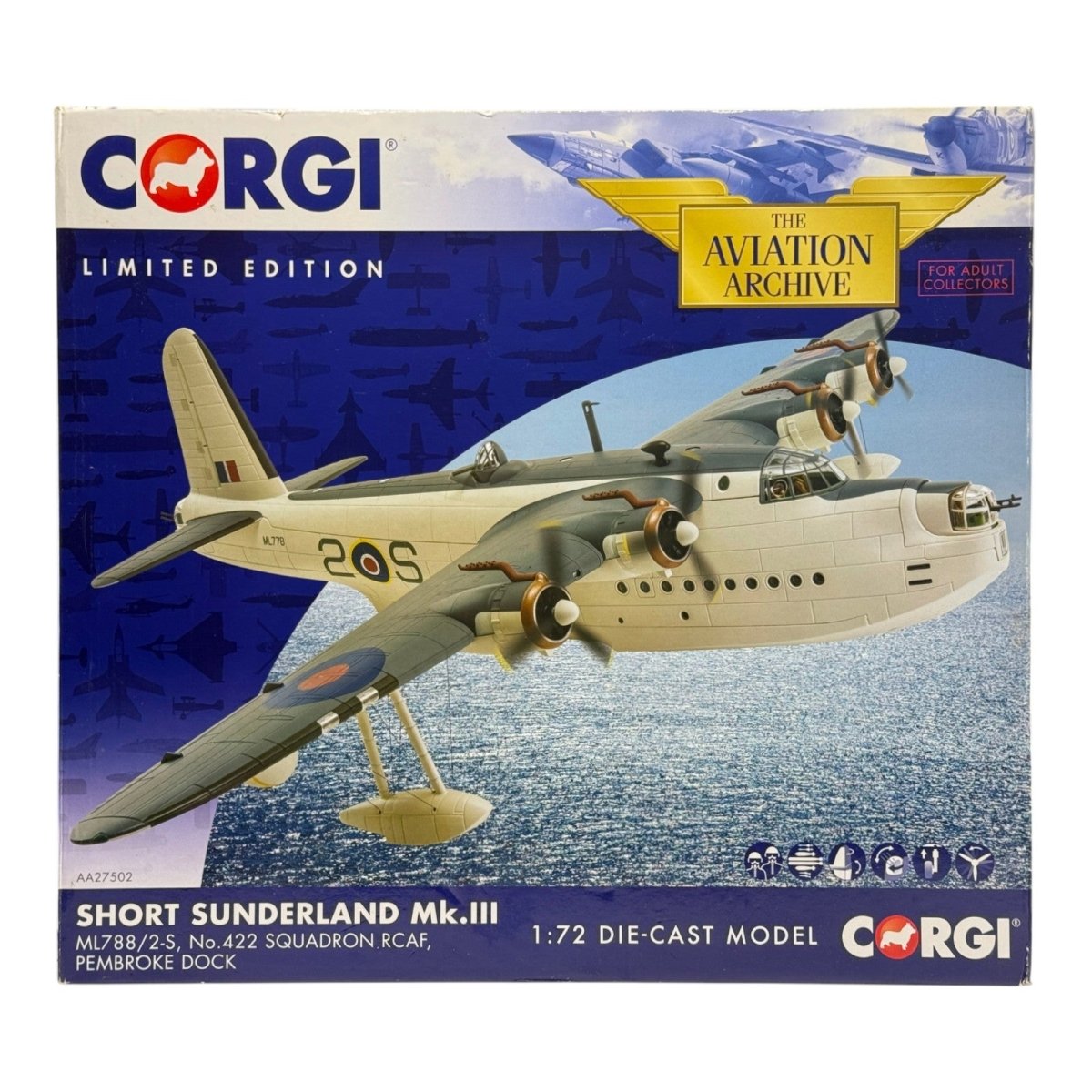
Corgi AA27502 1:72 Short Sunderland Mk III ML788 422 Sqn RCAF Pembroke DockPreowned - Excellent (8/10)
Sale price£260.00 GBP
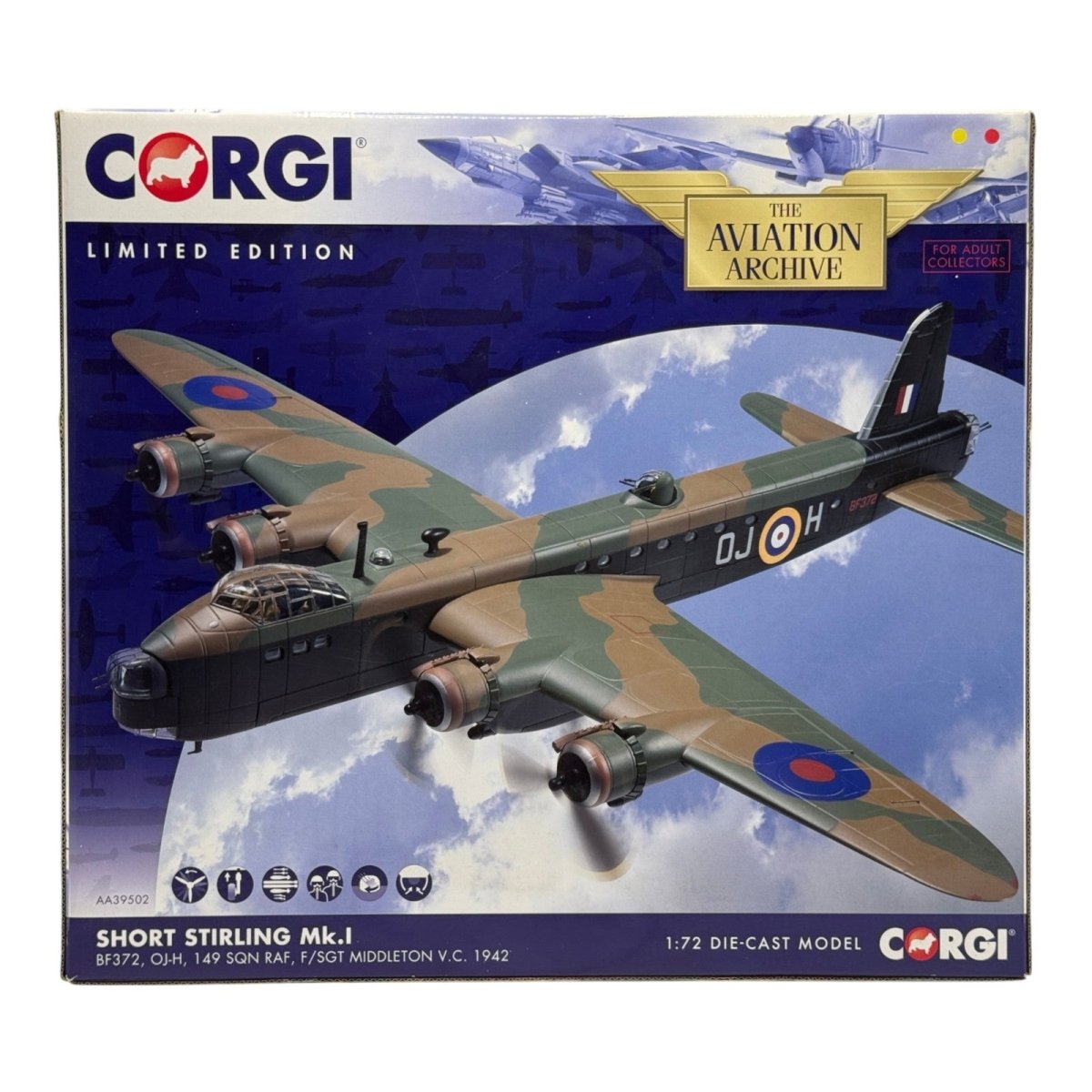
Corgi AA39502 1:72 Short Stirling B.Mk I BF372 149 Sqn Rawdon Middleton VC 1942Preowned - Mint (10/10)
Sale price£145.00 GBP


Browse Sold Archive
Browse previously sold diecast aircraft and collectable models from The Collectables Vault. This archive shows past stock, rare releases, and examples of the models that may return in future collections.