History Behind Corgi AA32608: Lancaster MkIII, Guy Gibson & 617 Squadron
INTRODUCTION
In May 1943, the RAF formed a new unit for a single, high-risk mission. Led by Wing Commander Guy Gibson, No. 617 Squadron was tasked with Operation Chastise - a low-level night raid aimed at striking the industrial heart of Germany by attacking key dams in the Ruhr Valley.
Flying modified Avro Lancaster MkIIIs, the squadron trained for a style of precision flying that pushed both aircraft and crews to the limit. The result became one of the most famous bombing operations of the Second World War - and the origin of the name “Dambusters”.
QUICK FACTS
-
Aircraft: Avro Lancaster MkIII
-
Operator/Unit: Royal Air Force - No. 617 Squadron
-
Pilot/Leader: Wg Cdr Guy Gibson (AJ-G)
-
Operation: Operation Chastise (Dambusters Raid)
-
Period: May 1943
-
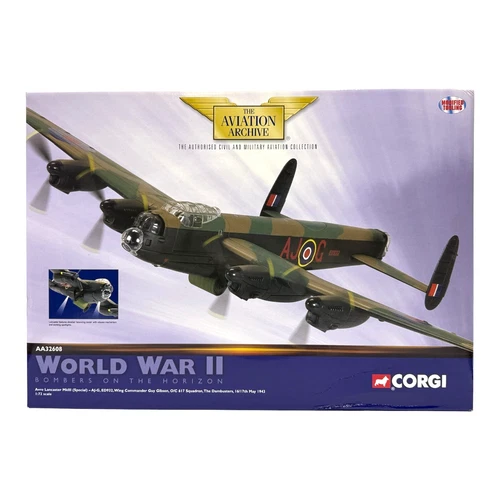
Model represented: 1:72 Corgi Aviation Archive AA32608
OPERATION CHASTISE AND THE UPKEEP MINE
Operation Chastise was built around a weapon unlike anything used before. Dr Barnes Wallis designed the “Upkeep” mine to solve a specific problem - how to breach a dam protected by torpedo nets and heavy defences. Instead of being dropped straight down like a conventional bomb, Upkeep was spun backwards and released at very low level so it could skip across the water, strike the dam wall, then sink and detonate at depth.
Making that concept work demanded near-perfect accuracy. Crews trained intensively to fly at around 60 feet above the reservoir surface, at a precise speed, and to release at exactly the right distance. In darkness, they used a simple but brilliant method: spotlights under the aircraft were angled so their beams met on the water only when the Lancaster was at the correct height.
GUY GIBSON, 617 SQUADRON AND THE DAMBUSTERS RAID
Gibson’s aircraft, coded AJ-G, led the first wave into some of the most heavily defended airspace in Europe. The Lancasters made repeated runs under intense anti-aircraft fire, holding a straight and steady course over the water to give the Upkeep weapon the best chance of working as intended.
After multiple attacks, the Möhne dam finally gave way, followed later by the Eder. The breaches released massive floods that tore through valleys below, damaging infrastructure and disrupting industrial production and transport links across the Ruhr. While the long-term strategic impact has been debated, the raid’s execution - low-level precision flying under fire - became legendary almost immediately.
CREW BRAVERY, LASTING LEGACY AND COLLECTOR APPEAL
The raid came at a high cost. Several aircraft were lost and many crew members were killed or captured. Gibson flew at the front of the formation to help draw enemy fire away from following aircraft, and he was later awarded the Victoria Cross for his leadership and courage.
Operation Chastise endures as a story of ingenuity, training, and determination - and the Lancaster MkIII has become one of the defining aircraft of RAF Bomber Command. For collectors, Corgi Aviation Archive AA32608 captures that historic moment, linking a Lancaster MkIII to Guy Gibson, 617 Squadron, and the drama of the 1943 Dambusters raid.
LOOKING TO ADD THIS TO YOUR VAULT?
Retired Corgi Aviation Archive releases can be difficult to replace once sold, particularly when they feature distinctive squadron histories and limited-edition markings.

CORGI AVIATION ARCHIVE LANCASTER MKIII AA32608
1:72 Scale • No. 617 Squadron • Retired Release
SHOP RELATED COLLECTIONS

Written by Jay Sawyer