How to Grade Diecast Aircraft Models: A Collector’s Condition Guide

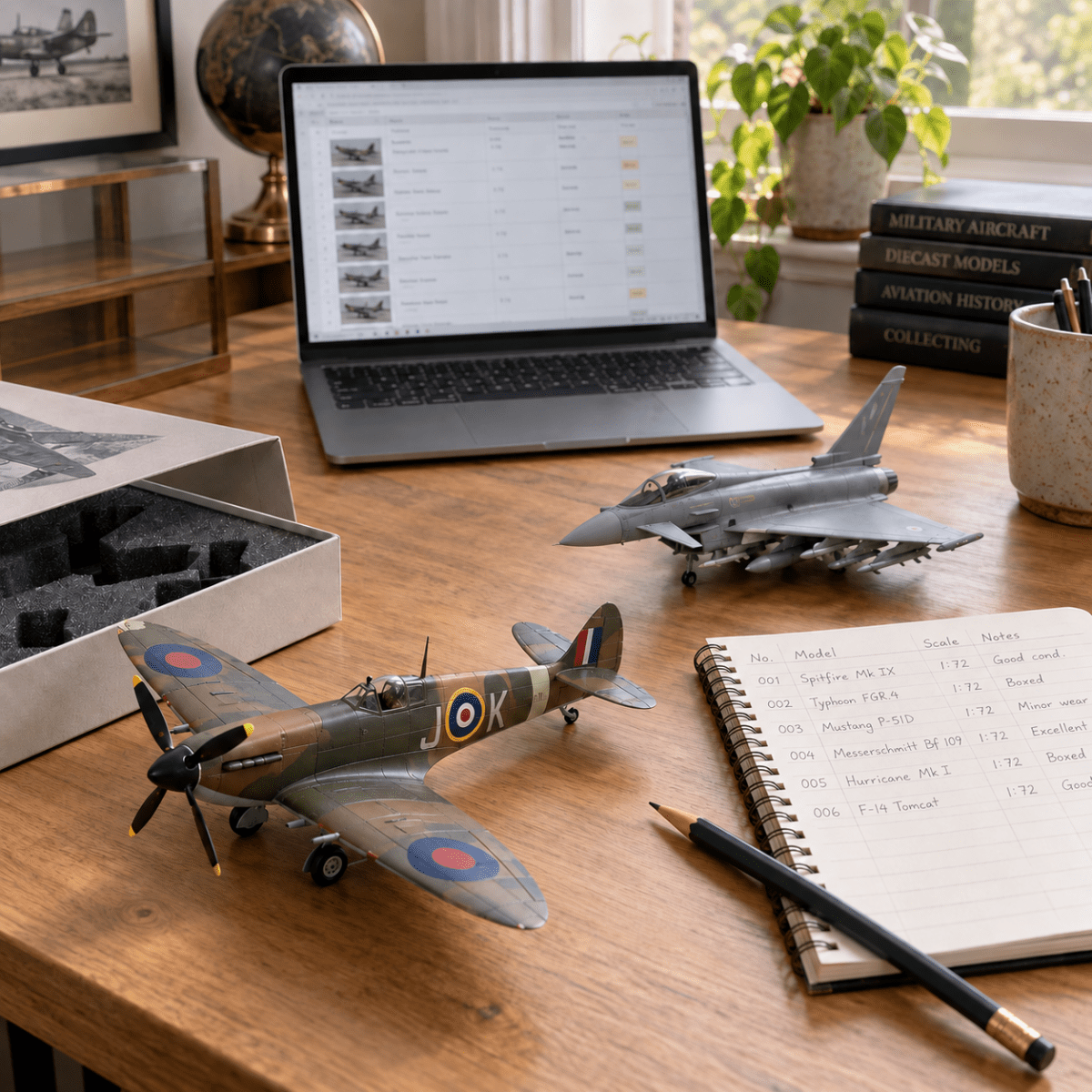
For collectors, condition is one of the most important parts of buying a diecast aircraft model. Two models can share the same brand, aircraft, scale and release code, yet still have very different appeal depending on paintwork, box condition, missing parts, repairs and overall presentation.
This guide explains how collectors can think about diecast aircraft model grading, what to look for when buying pre-owned models, and why model condition, box condition and completeness should often be considered separately.
If you are new to the hobby, you may also find our Beginner’s Guide to Diecast Model Collecting useful before choosing your next model.
For our official condition scale used across product listings, you can also view our Condition Grading Guide.
Why Condition Matters to Diecast Aircraft Collectors
Many collectable diecast aircraft models are no longer in regular production. Brands such as Corgi Aviation Archive, Hobby Master Aviation, Century Wings, Gemini Aces, Dragon Wings and Franklin Mint have produced models that can become difficult to find over time.
Because of this, collectors often have to choose between different pre-owned examples. One model may be boxed and barely handled, while another may have paint loss, missing accessories or a worn box. Both may still be collectable, but they should not be valued or described in the same way.
Good grading helps collectors understand what they are buying before it arrives. It also helps separate high-grade collector examples from more affordable display pieces, restoration projects or spares models. Collectors browsing our Shop All section will often find a mixture of high-grade boxed examples, display pieces and harder-to-find pre-owned diecast aircraft models.
Model Condition Is Not Always the Same as Completeness
One important point for collectors is that the condition of the model itself is not always the same as the completeness of the full set.
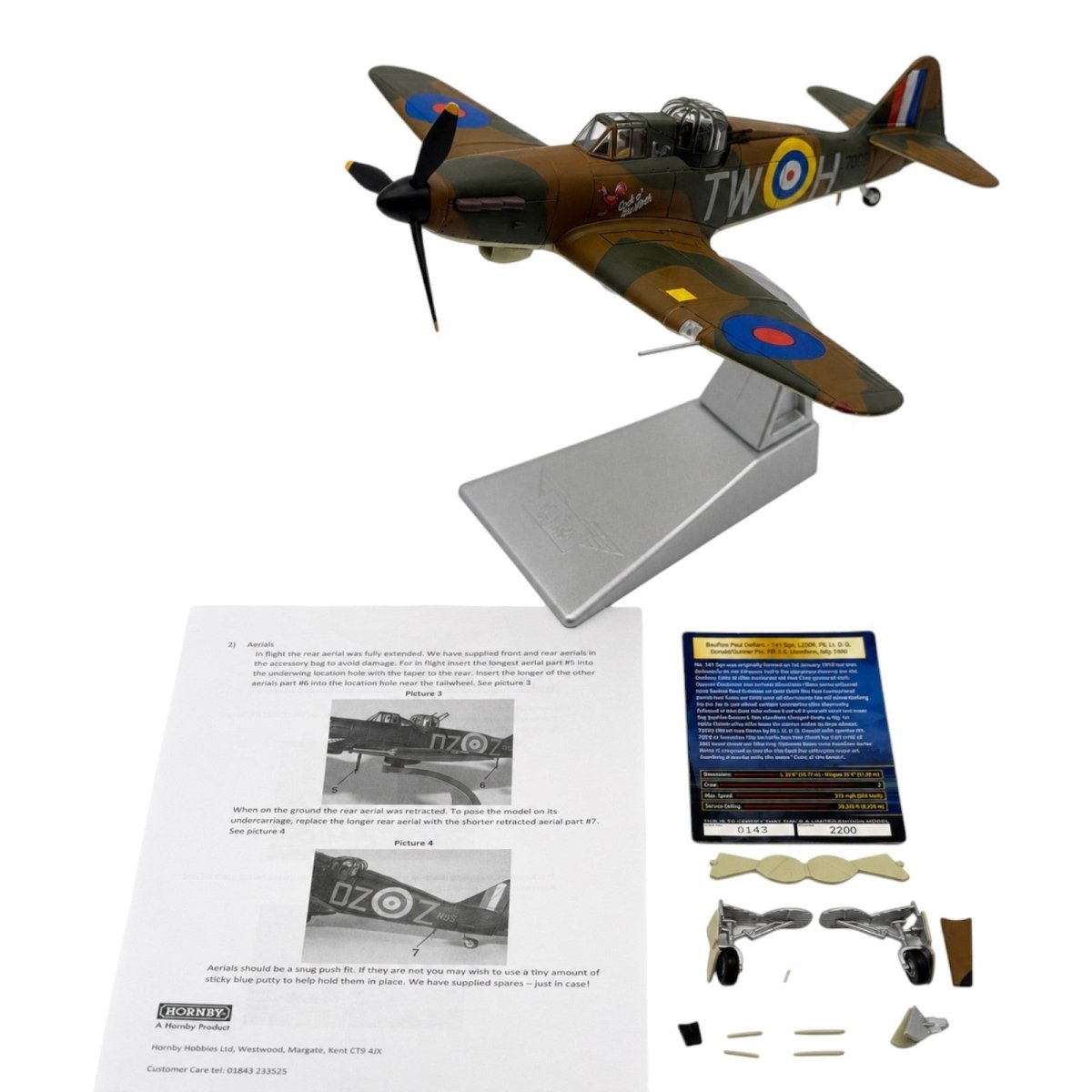
Model condition refers to the physical condition of the model. This includes the paintwork, attached parts, undercarriage, aerials, propellers, canopy, pylons, weapons, repairs, glue marks and overall presentation.
Completeness refers to whether the original extras are present. These may include stands, certificates, leaflets, screws, collector cards, optional weapons, spare parts or display accessories.
This means a model can sometimes be in Mint or Near Mint condition, even if a separate accessory is missing. For example, if the aircraft itself has no visible flaws but the original stand is missing, the model may still be mint, but the overall set would be incomplete.
However, if a missing or damaged part is attached to the model itself, such as an undercarriage door, wheel, propeller, canopy, aerial or pylon, this would usually affect the model condition grade.
Box Condition Also Matters
For many collectors, the box is an important part of the overall item. A strong box can make a model more desirable, especially for collectors who prefer complete boxed examples.
Common box issues include edge wear, corner wear, crushing, tears, fading, creasing, window splits, sticker residue, dents and storage marks. These issues may not affect how the model displays, but they can affect collectability.
This is why model condition and box condition are often best judged separately. A model may be excellent while the box is only very good, or the box may be clean while the model itself has visible flaws.
Common Condition Issues Collectors Should Check
When buying a pre-owned diecast aircraft model, collectors should look carefully at the areas most likely to show wear or damage.
Wing edges, nose sections, propellers, undercarriage, aerials, canopies, pylons and weapons are all common areas to inspect. Paint rubbing can also appear where models have sat in blister packaging, especially on some diecast aircraft releases.
Other issues to watch for include paint chips, paint bubbling, glue residue, loose parts, repaired parts, missing attached components, cracked plastic, damaged landing gear and signs of previous restoration.
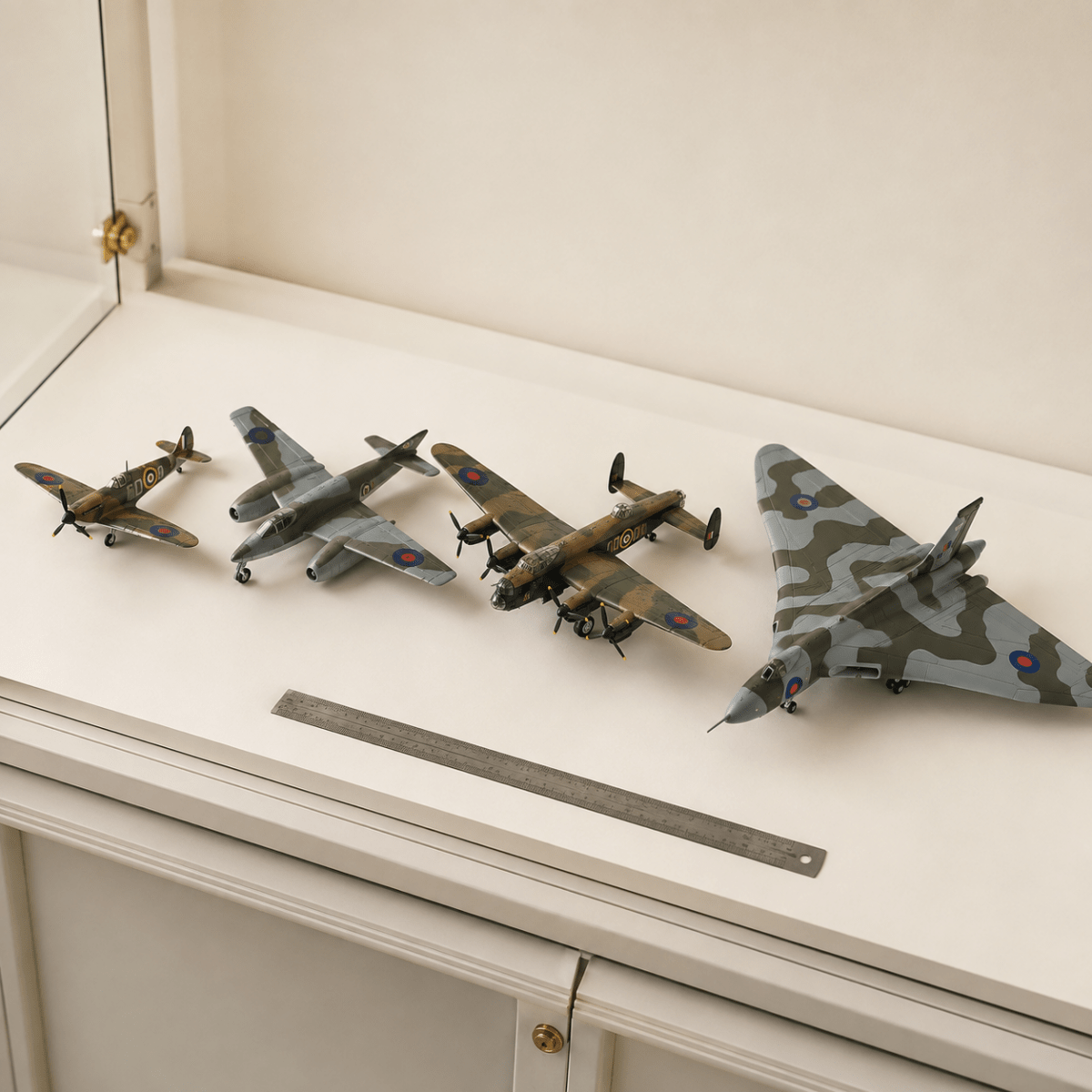
Larger scales can make these flaws more noticeable. A small mark on a 1:144 aircraft may be less obvious, while similar wear on a 1:48 or 1:32 model can stand out more clearly. You can learn more in our Corgi Aviation Archive scale sizes guide.
Collector Grading Scale: Mint to Spares / Repairs
Although grading can vary between sellers and collectors, the following scale gives a useful way to understand condition when assessing diecast aircraft models.
Mint (10/10)
A mint model should appear as new, with no visible flaws to the model itself. It should have clean paintwork, intact parts and no obvious signs of handling, display wear or repair.
Near Mint (9/10)
A near mint model may show very light signs of handling, storage or age, but any marks should be minimal. It should still present as a very high-grade collector example.
Excellent (8/10)
An excellent model may have light wear or a few tiny marks but should still display very well. This is a common grade for clean pre-owned models with only minor imperfections.
Very Good (7/10)
A very good model may show noticeable wear, small chips, rubs or light flaws, but it should still be complete, presentable and suitable for display.
Good (6/10)
A good model will usually have more obvious wear, visible paint loss or noticeable imperfections. These models can still make good display pieces, but they are less likely to suit collectors looking for top-grade examples.
Fair (5/10)
A fair model may have heavy wear, larger areas of paint loss, visible damage, repairs or other clear flaws. These models may still be collectable, especially if rare, but condition issues should be expected.
Spares / Repairs (4/10 or below)
This grade is usually used for models with significant damage, missing model parts, broken components or restoration needs. These examples may be best suited for repair projects, spare parts or custom work.
High-Grade Model, Incomplete Set
One area that can confuse collectors is when a model is in excellent or mint condition but the set is not fully complete.
For example, a Corgi Aviation Archive or Hobby Master Aviation model may be physically flawless but missing a stand, leaflet, screw pack or optional accessory. In this situation, the model itself can still be high grade, but the listing should clearly explain that an accessory is missing.
This distinction is important. A missing separate accessory affects completeness and value, but it does not always mean the model itself is worn or damaged.
Display Collectors vs Boxed Collectors
Different collectors care about condition in different ways. Some collectors want the best possible boxed example, with a clean model, strong box and all accessories included. Others are mainly interested in how the model looks on display.
A model with a worn box but clean paintwork may still be perfect for a display collector. On the other hand, a boxed collector may prefer to pay more for a complete example with stronger packaging.
This is why it is useful to look beyond a single overall grade. Model condition, box condition and completeness all help tell the full story.
Why Photos and Condition Notes Matter
Condition grades are helpful, but they should always be supported by clear photographs and honest condition notes. Collectors should check images carefully, especially close-ups of any visible imperfections.
Good photos can show small chips, rubs, repairs, missing parts or box wear more clearly than a short grade alone. This is especially important with pre-owned diecast models, where each example can vary depending on how it has been stored, handled or displayed.
When buying online, the best listings are usually the ones that show the actual model, describe any known flaws and clearly separate the model, box and accessories.
Collectors looking for more affordable display pieces, restoration projects or models with visible wear may also want to browse our Pre-Loved Models collection.
Final Thoughts
Understanding condition is essential when collecting diecast aircraft models. A high-grade boxed example, a clean display model and a worn restoration piece can all have a place in the collecting world, but they should be described clearly and priced accordingly.
For collectors, the key is to look at the full picture: the condition of the model, the condition of the box, whether the set is complete, and whether any flaws affect display value.
At The Collectables Vault, we aim to describe our pre-owned models as clearly as possible, with separate condition notes where needed. If you are unsure about a model’s condition, box or accessories, please contact us before ordering and we will be happy to help.
New to collecting? Read our Beginner’s Guide to Diecast Model Collecting, browse our latest diecast aircraft models, or explore our Pre-Loved Models for more affordable collector pieces.

Written by Jay Sawyer